



Thank you for contacting us!
We've received your inquiry.
Due to high demand, our respons time may take 1-2 business days.
We appreciate your patience and understanding.
Thank you for contacting us!
We've received your inquiry.
Due to high demand, our respons time may take 1-2 business days.
We appreciate your patience and understanding.
LASIK is a type of laser vision correction surgery designed to reduce or eliminate the need for glasses or contact lenses. It is commonly used to correct myopia (nearsightedness), hyperopia (farsightedness), and astigmatism, helping patients achieve clearer, more stable vision in everyday life.At its core, LASIK works by reshaping the cornea, the transparent front surface of the eye. When the cornea’s shape prevents light from focusing properly on the retina, vision becomes blurred. LASIK precisely adjusts this shape so that light can focus correctly, resulting in sharper vision.The procedure itself is relatively quick. After numbing eye drops are applied, a thin corneal flap is created, and a laser is used to reshape the underlying corneal tissue based on the patient’s individual eye measurements. The flap is then repositioned, where it naturally adheres without stitches. The entire process typically takes around 10–15 minutes per eye.One of the reasons LASIK is widely chosen is its fast recovery time. Many patients notice significant visual improvement within hours, and most are able to return to daily activities shortly after surgery. While mild dryness or temporary visual fluctuations can occur during recovery, these symptoms usually improve with proper postoperative care.However, LASIK is not a one-size-fits-all procedure. The most important step is a detailed preoperative eye examination. Factors such as corneal thickness, degree of astigmatism, overall eye health, and lifestyle must all be carefully evaluated. This thorough assessment allows doctors to determine whether LASIK is suitable or if another vision correction option would be more appropriate.Real patient experiences often reflect this process. For example, patients with very poor vision or high astigmatism are often surprised by how short the procedure is and how quickly their vision improves afterward—sometimes within the same day. Just as important, many report that clear explanations and attentive care help reduce anxiety, especially for those who feel nervous about medical procedures. In the end, LASIK is not just about advanced laser technology. Its success depends on accurate diagnosis, personalized treatment planning, and experienced medical care. When these elements come together, LASIK can be a safe and effective way to achieve clearer vision and greater freedom from corrective lenses.#SMILEPro #LaserEyeSurgery #VisionCorrection #ClearVision #EyeSurgery #MyopiaTreatment #AstigmatismCorrection #NoMoreGlasses #NoMoreContacts #EyeCare #BGNEyeClinic #ZeissTechnology #SeoulEyeClinic #ExpertSurgeons #InternationalPatients #MedicalTourismKorea #SafeEyeSurgery📞 Tel: 010-3435-5770 (KakaoTalk, WhatsApp available) 📧 Email: info@bgneyeclinic.com Website: bgneyeclinic.com Address: Lotte World Tower, 11th Floor, 300 Olympic Road, Songpa-gu, Seoul, Korea
SMILE Pro Side Effects? Why Patient Satisfaction Is Exceptionally HighA Firsthand Account from an OptometristHello, this is BGN Eye Clinic Jamsil.Lately, we have received a flood of inquiries about SMILE Pro. However, during consultations, certain questions come up without fail:"Are there really no pain or side effects with SMILE Pro?""I heard light halos are common. Is that true?"What patients researching SMILE Pro reviews care about most are the recovery process and concerns regarding potential side effects.To be honest, when our clinic first acquired the SMILE Pro equipment, I wondered myself, "With an incision this small, could it actually cause more discomfort?" But seeing patient reactions post-surgery, it turned out to be quite the opposite.Today, based on real patient experiences, I would like to explain why patients report minimal side effects and what makes satisfaction levels so high."SMILE Pro Side Effects: What About Light Halos?" The Real MeaningThe word "side effect" sounds alarming. However, a closer look at detailed SMILE Pro reviews reveals that most concerns actually refer to a temporary adaptation process following vision correction surgery.For instance, mild dry eye symptoms or subtle light glare at night right after surgery are temporary responses common to almost all vision correction procedures, including traditional LASIK and LASEK.Because SMILE Pro requires a significantly smaller corneal incision, this adjustment period is dramatically shorter. With minimal stress on the healing eye, symptoms like pain and dryness subside rapidly. Most patients mention that their eyes feel significantly more comfortable within 2 to 3 days, and by week one, they feel completely back to normal.While individual experiences vary, most patients end up laughing at their initial worries. Rather than actual side effects, it is simply a brief phase where the eye adapts to its new focal point.The Real Reasons Behind High Patient SatisfactionReading through SMILE Pro reviews, patients consistently share similar feedback:"I experienced almost no pain, which put my mind at ease regarding side effects.""The procedure was so fast, and the recovery period was surprisingly short."I was skeptical at first as well, wondering if recovery could truly be that fast. But after conducting post-op exams the very next day, I saw firsthand that the claims were completely accurate.SMILE Pro uses a tiny incision of approximately 2mm. Compared to traditional LASIK, which requires an incision near 20mm, this is practically the size of a pinhole. Consequently, surgical pain is minimal, and structural corneal stability is preserved. Many patients visit us the next day asking, "Did I really have surgery yesterday?"Rapid Recovery Designed for Busy ProfessionalsThe procedure time itself is extremely short, the laser application lasts roughly 10 seconds. It is over literally in the blink of an eye. Recently, an office worker in their 20s left a review saying, "I got the procedure right after work and went back to the office the next morning!" This highlights just how dramatically shorter the recovery period is, allowing a seamless return to daily routines.Why SMILE Pro Has Fewer Side Effects: The TechnologyFrom a technical standpoint, SMILE Pro is performed exclusively using the advanced VisuMax 800 laser system from ZEISS (Germany).Compared to legacy SMILE LASIK, the laser speed is significantly faster, and advanced centration technology enhances overall precision. Simply put, the laser operates swiftly and accurately only on the targeted tissue, leaving surrounding corneal tissue virtually undisturbed. A shorter laser application translates directly to reduced strain on the eye, naturally minimizing post-op dryness and light glare.During precise post-op examinations, the post-surgical cornea appears exceptionally clean. There is minimal swelling, and the corneal surface remains smooth. Looking at corneal cross-sections on the screen, the key takeaway is clear: the eye simply has less tissue to heal.SMILE Pro Frequently Asked Questions (FAQ)Here are answers to the most common questions and concerns patients express during consultations at BGN Eye Clinic Jamsil.Q. Is the procedure painful?Most patients experience virtually no pain during the procedure. Immediately after surgery, slight dryness or a foreign body sensation may occur, but these symptoms typically resolve quickly as the eye heals.Q. How long is the recovery period?While individual results vary, vision typically recovers sufficiently for daily activities by the next day. However, a follow-up observation period is recommended to ensure long-term visual stability.Q. Will I experience light glare or reduced night vision?Temporary glare may occur during the initial post-operative phase, but it generally improves as the eye adapts over time.Q. Is everyone a candidate for SMILE Pro?Eligibility depends on corneal thickness, degree of myopia, and overall ocular health. A comprehensive pre-operative examination is required to determine individual suitability."Comfort Outweighs the Worry of Side Effects"A patient visiting for their final checkup recently smiled and said, "I can't even remember what side effects I was worried about before surgery. Everything is just so crystal clear."That single statement sums it up. What matters most is not just the theoretical absence of side effects, but how quickly your eyes regain natural comfort. SMILE Pro excels in this regard, the period of mild discomfort is minimal, and visual clarity returns rapidly.We often say internally, "SMILE Pro doesn't just reduce side effects; it hardly gives the eye time to feel damaged." Rapid recovery, minimal tissue irritation, and stable vision. These three factors drive patient satisfaction.Hearing patients say, "It feels so comfortable now," makes all the effort worthwhile. SMILE Pro offers a surgical experience characterized by minimal discomfort and smooth recovery.During consultations, we reassure our patients: "Don't worry too much. It will be much easier than you expect."BGN Eye Clinic JamsilProviding clear vision and comfortable eye care for international patients.
Eye Drop Guide After LASIK & LASEK: Why Do They Taste Bitter?Essential Post-Op Care from Lee Sang-young, Customer Experience Manager (CEM)Hello! This is BGN Eye Clinic Jamsil Lotte Tower Branch.Do you know what the most common questions in our outpatient clinic are? They are all about eye drops. Patients naturally ask when and how often to apply them, but surprisingly, many also worry if something is wrong with their medication."I used my eye drops, but why do I taste something bitter in my mouth?"Patients who have undergone vision correction procedures such as LASIK, LASEK, or SMILE LASIK ask this question almost without exception. I find myself explaining this multiple times a day. People are often caught off guard when an eye drop causes a bitter taste in their mouth, even though it wasn't swallowed.Unless you have experienced it firsthand, you wouldn't expect eye drops to leave a bitter taste! Many wonder whether this is normal, while others seek guidance on correct administration methods and treatment duration. I have always wanted to create a comprehensive guide to address these concerns.In today's post for your healthy eye life, I will introduce the three most common eye drops prescribed after LASIK, LASEK, and SMILE LASIK, explain how to use them, and detail the cause and solution for that mysterious bitter taste."Why Do Eye Drops Taste Bitter?"A few days ago, a patient who had undergone LASEK surgery returned to our clinic for a follow-up visit. After the examination, the patient pulled me aside, feeling somewhat embarrassed, to ask if something unusual was happening. The medication in question was Cravit.The patient mentioned being startled by an intensely bitter taste in the mouth every time the drops were administered, as if oral medication had been taken instead.It is completely natural to feel surprised. We normally assume that a taste can only be perceived when food or medicine is consumed directly by mouth. However, tasting your eye drops is actually a common phenomenon. I smiled and reassured the patient:"There is no need to worry. Your eyes and nose are connected, so the eye drop solution drains down through the nasal passage into the back of your throat."The patient was relieved and fascinated to learn how the facial anatomy works.Top 3 Eye Drops Prescribed After LASIK and LASEKWhen you visit the clinic after surgery, you will typically receive a prescription for two to three types of eye drops. While exact prescriptions vary slightly between LASIK and LASEK, these three medications are the most standard.1. Flusone (Steroid)Flusone is an essential therapeutic agent that suppresses ocular inflammation and promotes corneal healing. On the day of surgery, instill 1 drop every 2 hours. Thereafter, apply 4 times daily (morning, lunch, evening, and before bed). Always shake well before use to ensure the active ingredients are evenly mixed.2. Cravit (Antibiotic)Cravit is an antibiotic designed to prevent external bacterial infections after surgery. For LASEK patients, it is typically used for 2 to 4 weeks even after the therapeutic contact lens is removed. Apply every 2 hours on the day of surgery, then 4 times daily until the bottle is finished. This is the medication most frequently cited for causing a bitter taste.3. Moxifle (Antibiotic)Moxifle reduces infection risks immediately following surgery and is commonly prescribed for LASIK patients. On surgery day, alternate instantiation with Flusone every 2 hours. Afterwards, use it 4 times a day (morning, lunch, evening, and before bed). Patients occasionally report a bitter taste with Moxifle as well."My Eye Drops Taste Bitter!" This Is a Completely Normal ReactionIf you are asking, "The medication tastes terrible, is this safe?" rest assured. It is a completely normal physical response. Human anatomy features a drainage pathway called the nasolacrimal duct (tear duct) connecting the inner corner of the eye to the nasal cavity. When eye drops are applied, a portion naturally drains through this duct into the nose and throat, triggering taste receptors.Solution: The Nasolacrimal Duct Occlusion TechniqueAfter instilling your eye drop, close your eye and gently press the inner corner of your eye (next to the bridge of your nose) with your finger for 30 seconds. This blocks the tear duct and prevents the fluid from draining into your throat.3 Post-Op Mistakes to Avoid When Applying Eye DropsTo ensure optimal healing and maximum comfort, avoid these common mistakes:Letting drops spill over the eyelid: Gently pull down your lower eyelid to create a small pocket, then place a single drop directly inside the eye for optimal absorption.Instilling multiple eye drops simultaneously: When using two or more different medications, wait at least 1 to 2 minutes between drops to prevent flushing out the first medication.Rubbing your eyes: Even if your eyes feel itchy right after surgery, never rub them. Gently dab away excess tears on your cheek using a clean tissue without touching the eye itself.Key Takeaways for a Smooth RecoveryRemember to shake Flusone thoroughly before every use, and utilize the tear-duct compression technique to prevent any bitter taste. Proper administration of eye drops is one of the most critical factors in your post-operative recovery. Because these medications interact directly with delicate corneal tissue, precise application guidelines must be followed.Some patients stop using their eye drops altogether due to the unexpected bitter taste. However, as explained, this taste is harmless. Maintaining a consistent eye drop routine as prescribed is vital for smooth vision recovery.In our next guide, I will share more insights on recovery routines and answers to the questions our customers ask most. We remain dedicated to supporting your visual health and resolving all your clinical questions.Have Questions About Your Vision Care? Contact BGN TodayBGN Eye Clinic Jamsil Lotte Tower BranchCommitted to your safe and lifelong vision recovery.
SMILE Surgery: Essential Insights for Managing Side Effect ConcernsA Surgical Team's Navigation Guide to a Safe ProcedureHello, this is BGN Eye Clinic Jamsil Lotte Tower Branch. As interest in SMILE surgery grows, many patients naturally express concerns regarding potential side effects, a question we encounter frequently during pre-operative consultations.A recent patient shared her anxiety after researching SMILE reviews and potential complications online, asking: "Will everything really go smoothly?" and "Could an error during surgery compromise my vision?" When facing these questions, we always emphasize one key point: psychological stability and patient cooperation during the procedure are just as critical as the surgery itself.From a surgical and nursing staff perspective, we would like to share how our team works to minimize variables in the operating room. If you are preparing for SMILE surgery and feeling anxious, we hope this guide offers reassuring clarity."What If Side Effects Occur?" Approaching SMILE Surgery with ConfidenceMany patients choose SMILE surgery due to its rapid recovery time and minimal discomfort. However, as it is often their first vision correction procedure, uncertainty about potential errors is completely natural.Beyond temporary post-operative adjustments like mild blurriness or an foreign body sensation, patients often worry about intraoperative factors such as blinking or involuntary eye movement.Frequent movements driven by nervousness can shift the laser target, potentially extending procedure time or recovery duration, and in rare cases, loosening suction. Rest assured, our surgical team and attending surgeon closely manage every step together.Why Focusing on the Surgical Team's Guidance MattersClosing your eyes or losing sight of the green target light are manageable variables during surgery. Following the team's live guidance ensures these moments pass smoothly without impacting the outcome.Two dedicated surgical and nursing staff members are present during every SMILE procedure. In addition to managing equipment and assisting the surgeon, our primary responsibility is providing real-time instructions to keep you calm and focused."You will see a green light now. Please keep looking at it even if it appears to fade.""As the laser starts, hold your focus just as you are doing now."These cues are specifically designed to prevent unexpected movement and help you maintain concentration.Recently, a visibly anxious patient asked right before surgery, "I'm terrified of making a mistake during the procedure..." Holding her hand softly, I reassured her: "Just keep your eyes on the green light. If you stay still, it will be over very quickly." Afterward, she smiled and mentioned that focusing solely on that instruction helped her pull through effortlessly. Live verbal cues serve as a navigational system, guiding you safely through the procedure.Minimizing Intraoperative VariablesSMILE surgery is completed in a short timeframe. Surgeons note that procedural flow and recovery are influenced far more by anxiety or sudden movements than by medical complications.Key variables to prevent:Difficulty holding position → May lead to suction releaseClosing eyes or shifting gaze when the light fades → Can affect laser deliveryBody tension or straining eyes from nerves → Can alter laser precisionThese factors are easily managed through clear team guidance and patient cooperation, ensuring a comfortable experience from start to finish.4 Essential Tips for Patients During SMILE SurgeryInform staff immediately if your eyes feel unusually dry before the procedure.Let us know beforehand if you feel breathless, confined, or uncomfortable.Maintain your gaze even if the green light fades; the laser is still actively working.Be open about your anxiety. We can provide a stress-relief plushie to help you relax.The Surgical Team's Voice: Your Operating Room Safety NetThe guidance you hear during SMILE surgery acts as a safety system for both your eyes and peace of mind. Reassurances like "Hold still," "You're doing great," and "Almost finished" enhance procedural safety and reduce anxiety.Remember, you are never alone in the operating room. SMILE surgery is a collaborative effort between you and our medical team. Trust our care as we work together toward your clear vision.BGN Eye Clinic is committed to delivering a safe procedure and a smooth vision recovery.
Can You Get SMILE Surgery with Severe Dry Eyes? An Optometrist's GuideStories from the Consultation Room at BGN Eye ClinicHello, this is BGN Eye Clinic Jamsil Lotte Tower Branch. Today's lunch was kimchi fried rice topped with scrambled eggs. After spending the entire morning in front of monitors and diagnostic equipment, the meal felt exceptionally rewarding.I often find myself thinking about lunch choices on my morning commute. Today, heavy traffic almost made me late for clinic hours, so I rushed in with a bit of nervous energy. Naturally, I compensated with my ultimate comfort food for lunch.Stepping back into the consultation room to welcome our scheduled patients, I noticed a remarkably high volume of inquiries regarding SMILE surgery once again. Every patient brings a unique expression. Some take a seat with a noticeably tense posture, while others walk in with a bright greeting, each communicating their daily discomfort through distinct body language. Consulting with such a diverse range of individuals daily makes me look forward to the stories and eye health discussions that each day will bring.Initial Consultation: Balancing Dry Eyes and Vision Correction ConcernsOur first patient of the day was a gentleman in his early 30s. As he opened the door, he gently rubbed his eyes and shared his frustration."Doctor, my eyes constantly feel gritty and exhausted throughout the day. Is SMILE surgery even an option for someone like me?"I offered a reassuring nod and invited him to take a seat. As we proceeded with the consultation, I carefully reviewed his recent ocular conditions, occupation, daily habits, and screen time on devices."On average, how many hours do you spend in front of digital screens each day?" I asked."Usually over 10 hours... It is unavoidable due to my work demands," he replied.It was an environment primed for rapid ocular fatigue. Learning that he routinely drinks coffee both in the morning and afternoon, I noted with a gentle smile, "It looks like we have found the primary culprits behind your dry eyes and tiredness."Following the initial discussion, we moved forward with comprehensive diagnostics to determine his candidacy for SMILE surgery. As we walked to the examination room, I explained each phase of the testing process."Today, we will thoroughly evaluate your eye health to verify whether SMILE surgery can be performed safely. You are in good hands, so please rest assured."Although he blinked nervously while taking a seat, I lightened the atmosphere with lighthearted conversation as I prepared the diagnostic machinery. By guiding him through brief blinking exercises to help him adapt to the instruments, we systematically evaluated essential parameters including corneal thickness, corneal curvature, and tear film stability. Explaining the vital role each measurement plays in maintaining long-term eye health allowed him to visibly relax and feel at ease. With the initial preparation complete, we transitioned directly into analyzing his candidacy and overall ocular health.Diagnostic Results: Is SMILE Surgery Safe to Proceed?Through step-by-step diagnostic evaluations, we meticulously examined his ocular conditions. Reviewing the final data brought an immediate sense of relief. • Corneal Thickness & Curvature: Highly stable and ideal for SMILE surgery • Refractive Stability: Both near and distance vision profiles meet surgical criteria • Corneal Health Status: Zero signs of structural damage or abnormality, guaranteeing procedural safety"Is my eye condition truly suitable for SMILE surgery?" he asked, looking at the display with pleasant surprise.I smiled and explained the findings in detail: "Your eyes are structurally sound and healthy, meaning SMILE surgery poses no excessive burden whatsoever. As long as you maintain positive lifestyle habits and proper post-operative care, your recovery should be exceptionally comfortable."With a relieved smile, his lingering tension dissipated entirely. "In that case, I am ready to move forward with SMILE surgery!" he declared confidently.Navigating SMILE Surgery Safely Despite Dry Eye SymptomsA common concern among patients is whether pre-existing dry eye conditions completely rule out eligibility for SMILE surgery. In reality, as long as structural diagnostics remain stable, the procedure can be performed with high safety standards.When diagnostic tests confirm healthy corneal thickness, optimal shape, and tear film integrity, SMILE surgery offers significant advantages through its micro-incisional approach, minimizing mechanical stress on ocular tissue. • Micro-Incision Design: Preserves corneal nerves, substantially reducing post-operative dryness and fatigue • Structural Integrity Maintenance: Preserves long-term corneal strength and visual stability • Accelerated Recovery: Delivers sharp visual clarity within just one or two daysUltimately, having dry eyes does not exclude you from candidacy. Provided your corneal architecture is strong and your healing capacity is sufficient, SMILE surgery remains a safe and effective vision correction option.Proactive Habits for Everyday Eye CareAchieving optimal visual results relies heavily on daily lifestyle choices and diligent pre- and post-operative care. • Practice intentional blinking during prolonged screen usage • Apply preservative-free artificial tears on a consistent schedule • Moderate excessive caffeine intake • Maintain adequate indoor humidity levelsThese straightforward habits play a decisive role in post-operative comfort. The takeaway is clear: do not let dry eye concerns hold you back. By evaluating your corneal structure and adjusting daily habits, SMILE surgery can be completed with peace of mind. Small interventions such as stepping away from screens periodically, utilizing artificial tears appropriately, and keeping caffeine and ambient humidity in check make a profound difference in everyday comfort.The Key Advantages of SMILE SurgeryOne of the most compelling aspects of SMILE surgery is its remarkable speed. Utilizing a micro-incision technique, the laser phase is completed rapidly, reducing surgical stress and facilitating superior immediate post-operative comfort.Minimal discomfort is another significant benefit. By minimizing disruption to corneal nerve fibers, patients often experience such a smooth recovery that they wonder if the procedure took place at all. Visual comfort is just as crucial as achieving 20/20 vision.This microscopic incision profile makes SMILE surgery an attractive consideration for individuals prone to dry eyes. Unlike conventional LASIK or LASEK, the small incision significantly lowers the burden of post-procedure dryness, laying the groundwork for a seamless healing process.Furthermore, visual recovery is remarkably swift. Most patients regain 80% to 90% of functional vision by the very next morning, enjoying crisp visibility with every blink. Daily routines, professional tasks, and light exercise can be resumed almost immediately without disruption.Finally, because the procedure requires only a minimal corneal opening, structural stability is preserved over the long term. Keeping your eyes healthy ensures your visual clarity remains comfortable for years to come.Closing ThoughtsIf dry eye syndrome has made you hesitate about vision correction, keep in mind that with proper diagnostic evaluation and simple habit adjustments, safe visual restoration is well within reach.The eyes are delicate organs that respond quickly to fatigue and environmental dryness. Extended device usage, reduced blink rates, and dry indoor air can easily lead to ocular strain. Therefore, vision correction involves more than sharp focus; verifying overall comfort and structural stability is paramount.While SMILE surgery offers rapid recovery and minimal tissue disruption, long-term ocular health depends on consistent lifestyle management. Adequate rest, conscious blinking, humidity control, and caffeine management all contribute directly to lasting visual comfort.By building these thoughtful habits, you protect not only your visual acuity but also the overall health of your eyes. We hope this guide offers practical reassurance for anyone evaluating SMILE surgery alongside dry eye concerns.Wondering if SMILE surgery is right for your dry eyes? Contact BGN Eye Clinic for a comprehensive diagnostic assessment.
Wondering How to Properly Apply Eye Drops After SMILE Surgery?Essential tips directly from BGN Eye Clinic Jamsil Lotte TowerHello! This is BGN Eye Clinic's flagship branch at Jamsil Lotte Tower.There is a phrase I share most frequently with our post-SMILE patients:“Your surgery is complete, but applying your eye drops correctly is where the real journey begins!”For vision correction procedures like SMILE, post-operative care is just as critical as the surgery itself. Recovery is heavily influenced by daily habits at home, specifically, consistently administering drops and adhering to safety instructions. Because these medications are applied directly to your eyes, maintaining strict hygiene and proper techniques is vital.Let’s dive into the most common questions our patients ask and explore how to administer your eye drops effectively.Is It Harmful if the Eye Drop Tip Touches My Eye?A few days ago, a patient visited us for an outpatient checkup and asked, “I’ve been applying my drops like this... but I’m not sure if I’m doing it right.” Upon asking for details, I learned they found it difficult to keep their eyes open during application.As a result, they pressed the bottle tip directly against their eye, squeezing a large amount of solution, yet felt it wasn't being absorbed properly. On occasion, the tip even accidentally poked their eye.Many SMILE patients realize only later that they have been administering their medication incorrectly. Touching the tip directly to the eye, often due to fear of missing or difficulty holding the eyelid open, is one of the most frequent mistakes. Doing so significantly increases the risk of bacterial contamination.To prevent this, hold the bottle approximately 1 cm away from your eye and gently release a single drop.Applying Eye Drops Directly onto the CorneaAnother common mistake is dropping the liquid directly onto the center of the eye, the cornea. Many patients do this believing it ensures accurate delivery. However, applying drops directly to the cornea causes stronger irritation and triggers a severe blink reflex. Consequently, the liquid washes out before it can be absorbed, leaving behind unnecessary discomfort.Instead, use your finger to gently pull down your lower eyelid and place the drop inside the lower conjunctival sac. This approach is both comfortable and effective.Another patient shared that they habitually rubbed their eyes immediately after applying drops because of a mild stinging sensation. Following surgery, your cornea is extremely sensitive. You must never rub your eyes. After applying your drops, simply close your eyes and rest briefly.The Risks of Using Too Much or Too LittleDosage imbalance is another frequent issue. One patient applied drops numerous times a day, thinking, “Since my eyes feel dry and uncomfortable, using more must be better.” Conversely, another patient admitted, “My eyes felt cold, so I only used them once a day...”Both extremes can be detrimental to your recovery. Overusing drops destabilizes your natural tear film, while underusing them can delay the healing process. Always adhere strictly to the daily frequency prescribed by your doctor.Hygiene is equally paramount. Because eye drop administration involves proximity to the eyes, applying them without thoroughly washing your hands poses a risk. Always wash your hands thoroughly before touching your face or medication to prevent bacterial infections.Try This Posture for Easy ApplicationPatients often express surprise at how effortless drop administration appears during clinic visits. The secret lies entirely in posture. Administering drops while sitting straight up or looking directly forward is challenging for anyone, especially when trying to see what you are doing.Here is the recommended posture for effortless application:Sit comfortably and gently tilt your head backward.Use one hand to lightly pull down your lower eyelid.Instill exactly one drop into the pocket formed by the lower eyelid (conjunctival sac).Close your eye and gently press the inner corner near your nose (punctal occlusion to prevent a bitter taste from the medication draining down your throat).Following these steps will make your routine much easier. One patient mentioned after learning this technique, “Wow, what a difference! The medication used to just spill down my cheek before.” Moments like that are deeply rewarding, as our core mission is supporting your complete post-operative recovery alongside a successful surgery.Adapting to a new post-op regimen can feel overwhelming with multiple medications and guidelines to remember. However, consistent and proper care each day builds the foundation for a smooth recovery.If you experience any discomfort or have questions, please reach out to BGN Eye Clinic Jamsil Lotte Tower. Our nursing team is dedicated to supporting your recovery every step of the way!Have questions about eye drop application or post-SMILE recovery?Consult with BGN Eye Clinic Today
Noticed a Temporary Drop in Vision After SMILE Surgery? It May Be a Normal Sign of HealingAn Essential Recovery Guide Directly from BGN Eye Clinic’s Surgical & Nursing TeamHello! Welcome to BGN Eye Clinic’s flagship branch at Jamsil Lotte Tower. While we meet patients every day in our clinic, sharing our story in writing feels uniquely special and exciting.Lately, one question comes up more than any other in our care sessions: “Doctor, it’s been about a month since my SMILE procedure, but my vision feels slightly lower than before.” So many patients share this exact concern, which is why we’d like to address it today. In the vast majority of cases, this is simply a temporary phase within the normal SMILE recovery process.Why Does Your Vision Feel Temporarily Reduced?SMILE laser surgery corrects vision without large corneal incisions, utilizing a microscopic entry point thinner than a strand of hair. While this enables remarkably rapid recovery and minimal discomfort, it also means your eyes undergo a delicate stabilization phase where they remain sensitive to microscopic changes.Immediately following surgery, several subtle physiological processes occur simultaneously as the cornea adapts to its new refractive shape:Microscopic Corneal Edema (Swelling): Slight fluid retention around the laser-treated area temporarily alters the path light travels through the eye.Corneal Nerve Regeneration: As severed nerve pathways reconnect, sensory responses and tear film distribution remain temporarily unsettled.When these factors combine, the precise focus point on your retina can shift ever so slightly, leading to moments where you might think, “Is my vision a bit blurrier today than yesterday?” Far from being a cause for concern, this indicates a natural adaptation process where your eyes are learning to navigate their newly corrected visual field.We often use this analogy in the consultation room: “It’s like getting a new pair of glasses; unfamiliar at first, but settling into crystal-clear vision after a few days.” Your vision hasn’t permanently declined; your eyes are simply finding their focal equilibrium.How Dry Eye Symptoms Affect Your Visual ClarityDryness is one of the most common post-operative experiences following SMILE surgery. Because surface corneal nerves are micro-incised during the procedure, tear production regulation takes a little time to fully normalize as those pathways heal.Tears do far more than just lubricate the eye; they form a smooth, transparent optical layer that allows light to pass through evenly. When this layer becomes uneven, light scatters across the surface, much like looking through a rain-streaked window, causing temporary blurriness.Consequently, you might feel that your vision is less sharp on certain days, or notice slight glare and halo effects around lights at night. These temporary shifts are largely due to an unstable tear film. Exposure to indoor heating, dry breezes, or extended screen time accelerates tear evaporation, placing extra demand on your recovering eyes.Daily Lifestyle Habits to Support Your HealingTreat Artificial Tears Like Hydration: Think of lubricating drops as moisturizer rather than medicine. Instill them consistently throughout the day just as you would drink water when thirsty.Follow the 20-20 Rule: When using screens or digital devices, close your eyes or gaze into the distance for 20 seconds every 20 minutes.Manage Your Environment: Avoid direct airflow from heaters or air conditioners, and maintain an indoor humidity level between 40% and 60%.Use Gel-Based Lubricants at Night: Applying a gel-type artificial tear right before sleep keeps your eyes comfortable and protected overnight.Implementing these simple steps stabilizes the ocular surface, noticeably accelerating the return of clear, crisp vision. Small daily habits serve as the ultimate protection during your recovery.When Does the Cornea Fully Stabilize?Although SMILE offers a exceptionally swift recovery, full corneal stabilization varies slightly from person to person. Generally, visual clarity sharpens significantly within the first one to two weeks, while the corneal tissue fully settles into its permanent position over approximately three months.Patients frequently remark, “My vision was great yesterday, but today feels a bit hazy,” or “My eyes feel clearer in the morning than in the afternoon.” While fluctuating clarity can cause anxiety, it is a completely normal part of the healing path.During the first month post-surgery, subtle corneal swelling gradually subsides while nerve pathways re-establish themselves. Think of this as a fine-tuning stage where your eyes micro-adjust focus to adapt to their updated refraction.For instance, eyes may feel sharp in the morning due to overnight moisture, but experience mild afternoon dryness that temporarily softens focus. We refer to this period as the visual fine-tuning phase. Just as an instrument is tuned to perfection, your eyes are finding their ideal balance. Evaluating your progress week-by-week rather than day-by-day offers the best perspective. By maintaining your artificial tear regimen and healthy eye habits, you will soon experience lasting visual comfort.When You Should Consult Your ClinicWhile minor vision fluctuations are expected during post-SMILE recovery, it is crucial to distinguish between typical healing signs and symptoms requiring medical evaluation. If you encounter any of the following persistent signs, please schedule a visit promptly:1. Sudden Blurring or Asymmetric Changes in One EyeIf blurriness develops suddenly or affects only one eye, it may indicate localized corneal inflammation or micro-epithelial irritation. Because corneal tissue is highly sensitive, prompt examination ensures optimal resolution.2. Worsening Glare, Light Sensitivity, or PainMild light sensitivity is normal early on, but increasing discomfort, deep ocular aching, or sharp sensitivity suggests the corneal epithelium needs additional medical support or anti-inflammatory treatment.3. Prolonged Redness or Persistent SwellingRedness that persists despite frequent lubricant use may signal epithelial haze or inflammatory edema rather than simple dry eye. Early clinical intervention with prescribed eye drops restores clarity swiftly.“If your eyes feel unusually uncomfortable, taking the proactive step to have them evaluated is always the safest choice.”Reassurance for Your Healing JourneyTemporary fluctuations after SMILE surgery simply reflect your eyes adjusting to a renewed visual world. Day by day, your focus will steady until you wake up to effortless clarity.Hearing patients say, “I was worried at first, but now my eyes feel so comfortable!” is the most rewarding part of our work. The care we deliver in the operating room comes full circle when we guide you safely through recovery.If you are currently experiencing mild blurriness, take a deep breath. Eyes are remarkably delicate, yet impressively resilient. Healing at a steady, comfortable pace is the best approach. We hope this guide brings you peace of mind, and our surgical and nursing teams remain dedicated to supporting your vision every step of the way.Warmly,BGN Eye Clinic Jamsil Lotte TowerCurious about your post-SMILE visual recovery progress?Connect with BGN Eye Clinic Today
Proven Advantages in SMILE Pro Reviews: What Has Changed from Traditional Procedures?An in-depth analysis of the core advancements in modern vision correction surgery by Dr. Han Jung Yeop at BGN Eye Clinic Jamsil.Patient Inquiry:"When reading SMILE Pro reviews online, people say they can wash their face and look at their smartphones the very next day. Is that really true? I'm confused about how it actually differs from traditional SMILE LASIK."Hello. I am Dr. Han Jung Yeop, a dedicated SMILE Pro specialist at BGN Eye Clinic Jamsil.Recently, the most common question I receive from patients visiting our clinic after reading SMILE Pro reviews is: "Can I truly resume daily activities like washing my face or using my smartphone starting the very next day?"Many patients are also curious about the exact clinical differences when compared to traditional SMILE LASIK. Vision correction surgery continues to evolve alongside technological advancements, and standing at the forefront of this evolution is SMILE Pro.Today, I will provide a clear and concise explanation of the recovery timeline frequently highlighted in real SMILE Pro reviews, as well as the distinct differences separating it from traditional procedures.SMILE Pro vs. SMILE LASIK: Technological Evolution at the CoreTraditional LASIK offers rapid recovery but requires creating a large corneal flap. Conversely, LASEK ensures superior corneal stability, yet presents burdens regarding postoperative discomfort and an extended recovery period.To overcome these limitations, SMILE LASIK was developed as an innovative procedure that requires only a micro-incision of approximately 2mm. Building upon this foundation, SMILE Pro represents the latest upgrade, elevating laser speed and precision to the next level.Three Primary Benefits Experienced by Patients in Real Reviews1. "The procedure was finished in the blink of an eye" (Sub-10 Second Laser Delivery)The most frequently mentioned feature in SMILE Pro reviews is the remarkable surgical speed.While traditional SMILE LASIK required approximately 20 to 25 seconds of laser irradiation per eye, SMILE Pro reduces this time by more than half, down to approximately 10 seconds per eye utilizing the advanced VisuMax 800 system.By significantly shortening the required fixation time, psychological anxiety and the fear of blinking or moving during surgery are substantially alleviated, offering a major clinical advantage for nervous patients.2. "I washed my face and returned to work the next day" (Accelerated Recovery)For working professionals, post-operative dryness and daily life disruptions are primary concerns. SMILE Pro utilizes the same ~2mm micro-incision method as SMILE LASIK, minimizing damage to corneal nerves that regulate tear secretion.Consequently, patient reviews frequently highlight a seamless recovery process, with most individuals comfortably washing their faces lightly, viewing monitors, and operating smartphones starting the morning after surgery.3. "Night vision feels exceptionally clear" (Reduced Night Glare)The defining technical upgrade setting SMILE Pro apart is its real-time ocular movement compensation technology.The system incorporates CentraLign for precise visual axis alignment and OcuLign for flawless astigmatism axis compensation, adjusting for rotational shifts that occur when a patient lies down.This high-precision axis compensation significantly mitigates night glare and halos, issues commonly experienced by patients with high myopia or severe astigmatism, thereby enhancing overall quality of vision. SMILE Pro Costs and Rational Decision CriteriaBecause SMILE Pro integrates state-of-the-art VisuMax 800 technology and advanced digital alignment systems, its cost is higher than standard vision correction procedures. However, considering the lifelong value of your eyes, it represents a worthwhile investment for individuals who fit the following profiles:Patients who experience high anxiety about blinking or eye movement during surgery (benefiting from the 10-second laser stabilization)Individuals prone to dry eye syndrome who worry about post-operative ocular tightnessProfessionals, military personnel, flight attendants, and freelancers who cannot take extended leaveIndividuals who frequently drive at night or engage in active sports*Note: Patients with extreme high myopia (over -10D) or excessively thin corneas may require alternative customized options, such as Implantable Collamer Lens (ICL) surgery.Clinical Expert Advice: How to ChooseRather than deciding solely on reviews or cost, your highest priority must be a comprehensive diagnostic evaluation analyzing corneal thickness, refractive error severity, and lifestyle habits.Ultimately, a successful outcome does not stem merely from choosing the newest surgical method, but from selecting the procedure safest and most suited to your unique ocular profile.SMILE Pro: Top 3 Patient Questions (FAQ)Q1. Why is SMILE Pro more expensive than traditional SMILE LASIK?SMILE Pro utilizes the cutting-edge VisuMax 800 laser delivering 2,000 kHz pulse repetition rates, alongside automated visual and astigmatism axis correction technologies. Despite the higher cost, patients report high satisfaction due to reduced procedure times and superior long-term visual quality.Q2. How long is the recovery period? When can I wash my face?Because SMILE Pro uses a ~2mm micro-incision, recovery is exceptionally fast. Patients can resume basic daily activities including light face washing, applying skin makeup, and using smartphones or computers starting the day after surgery.Q3. Will I experience dry eyes or night glare after surgery?Corneal nerve disruption is minimized, significantly reducing post-operative dry eye symptoms compared to traditional methods. Furthermore, precision alignment technology drastically reduces the risk of night glare in patients with severe myopia or astigmatism.BGN Eye Clinic JamsilSource: BGN Eye Clinic Jamsil | SMILE Pro Surgical Guide
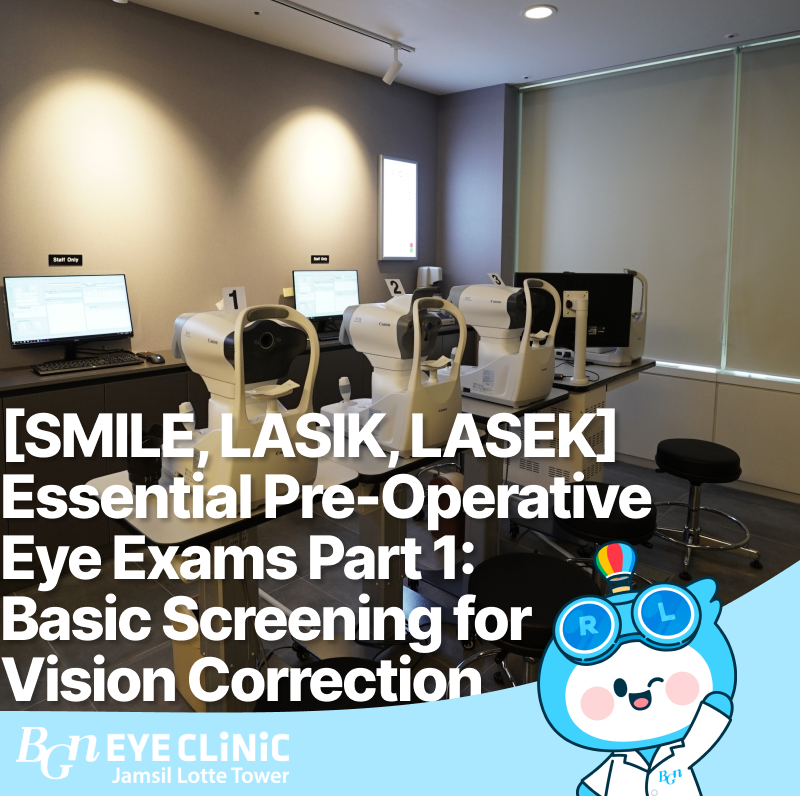
Contact Lenses & Makeup Before SMILE LASIK: Pre-Exam Guidelines SummaryBGN Eye Clinic Jamsil Lotte Tower (Main Branch)"Is a successful surgery all that matters?"Welcome to BGN Eye Clinic Jamsil Lotte Tower Branch.SMILE LASIK is not a procedure that relies solely on what happens on the day of surgery. In fact, the stage that has an even greater impact on your surgical outcome is the pre-operative examination and preparation phase. In particular, contact lens wear and eye makeup habits directly influence optometric measurements, making proper pre-exam management essential for an accurate diagnosis.1. Why Pre-Operative Examination for SMILE LASIK Is CriticalSMILE LASIK is far more than simple vision correction. It requires a comprehensive analysis of your corneal structure, vision fluctuation patterns, tear film stability, and overall ocular health.The pre-operative examination serves as an indispensable step to determine:Whether you are an eligible candidate for surgeryWhich vision correction procedure is best suited to your eyesWhat your expected recovery trajectory will beDuring this process, wearing contact lenses or eye makeup before the exam can act as confounding variables that alter your diagnostic measurements:Contact lenses cause temporary warpage and structural changes to the cornea.Cosmetic residues interfere with tear film stability and corneal imaging.Following pre-exam guidelines regarding contact lenses and makeup is therefore a fundamental prerequisite for obtaining precise optometric data.2. Essential Pre-Operative Preparation RulesTo ensure maximum diagnostic accuracy, several precautions must be observed in your daily routine prior to testing. At BGN Eye Clinic, we advise all patients to adhere to the following protocols:1) Discontinue Contact Lens WearBecause contact lenses exert continuous mechanical pressure on the cornea, measuring corneal shape and thickness while wearing lenses or shortly after removing them leads to distorted results.Recommended Discontinuation Periods Before Exam:Soft Lenses: Approximately 5–7 daysHard Lenses (RGP): Approximately 2 weeksOrthokeratology (Dream Lenses): Approximately 4 weeks or longerFailing to observe these lens discontinuation periods can compromise diagnostic precision, potentially requiring re-examinations or rescheduling your procedure.2) Refrain from Eye Makeup and Eyelash TreatmentsPatients frequently inquire whether makeup is permissible before testing. Cosmetic products and eyelash treatments prior to your exam can significantly interfere with diagnostics.Fine cosmetic particles, mascara debris, or chemical residue from lash lifts and extensions can compromise corneal surface integrity and tear film analysis. We strongly recommend avoiding all eye makeup, lash perms, and eyelash extensions prior to your pre-operative appointment.3) Ensure Adequate RestSleep deprivation and ocular fatigue alter refraction values, tear osmolarity, and overall diagnostic consistency. It is essential to arrive on your examination day well-rested and in optimal physical condition.3. Key Pre-Operative Diagnostic Test ItemsA comprehensive diagnostic evaluation before SMILE LASIK is mandatory. When selecting an eye clinic, verifying the thoroughness of their diagnostic suite is crucial.Corneal Pachymetry: Measures corneal thickness to confirm adequate residual tissue and surgical candidacy.Corneal Topography: Maps corneal curvature to screen for asymmetry, irregular astigmatism, or keratoconus.Intraocular Pressure (IOP) Test: Evaluates internal eye pressure to screen for glaucoma risk factors.Pupillometry: Measures pupil size under varying light conditions to assess potential risk of night glare or halos.Refraction Testing: Determines precise refractive errors (myopia, astigmatism) as baseline data for laser calibration.At BGN Eye Clinic, we perform over 60 specialized precision tests including those listed above to evaluate each patient's ocular profile from multiple clinical angles.1-Minute Q&A – Pre-SMILE LASIK FAQsQ1. How should I prepare for my pre-operative examination?Discontinue contact lens wear according to the required timeframe, refrain from wearing eye makeup, and ensure you are well-rested. Specific instructions may vary slightly depending on your individual lens history and eye condition.Q2. Will it help if I bring my past eye exam records?Previous records can serve as useful reference material, but as a rule, a complete and fresh diagnostic workup must be conducted under standardized conditions before surgery.Q3. How quickly can I return to daily activities after SMILE LASIK?Initial visual recovery is typically rapid, but visual stabilization timelines vary among individuals. Resumption of high-impact activities should follow a phased approach as advised by your medical team.4. Finding the Vision Correction Procedure Suited to Your EyesAlthough SMILE LASIK is a widely chosen vision correction method, it is not a one-size-fits-all solution for every eye. Adhering to pre-operative instructions and undergoing thorough diagnostic testing are critical first steps.At BGN Eye Clinic Jamsil Lotte Tower Branch, we conduct rigorous multi-dimensional analyses of the cornea, refractive error, and tear stability to guide you toward the safest and most effective vision correction plan.A successful surgery begins with an accurate diagnostic evaluation. Start your journey toward clear vision by reviewing our pre-exam lens and makeup guidelines today.BGN Eye Clinic fully supports your lifelong eye health and vision clarity.Source: BGN Eye Clinic Jamsil Lotte Tower Main Branch | SMILE LASIK Guide