Спасибо за обращение к нам!
Мы получили ваш запрос.
В связи с большим количеством обращений, время ответа может составлять 1–2 рабочих дня.
Благодарим вас за терпение и понимание.
Спасибо за обращение к нам!
Мы получили ваш запрос.
В связи с большим количеством обращений, время ответа может составлять 1–2 рабочих дня.
Благодарим вас за терпение и понимание.
As of the 17th, BGN Eye Clinic has been officially designated as a certified partner ofthe Korea National Team Athletes Association, which includes many current and former national athletes.On this day, we provided a range of medical services to visiting national athletes, including comprehensive eye examinations and dry eye treatments.BGN Eye Clinic will continue to support the healthy vision and clear eyesight of our national athletes with ongoing care and commitment.
Can You Binge-Watch Netflix After SMILE LASIK? Recovery Tips and Eye Care Advice from an Ophthalmologist By BGN Eye Clinic Jamsil Lotte Tower Hello, this is BGN Eye Clinic located at Jamsil Lotte Tower.Do you enjoy binge-watching Netflix or scrolling through YouTube on your smartphone after work or over the weekend? Honestly, I feel the same way. It is a great way to unwind and enjoy a quiet end to a busy day.Recently, a male patient in his 30s who works as an accountant asked us an interesting question following his SMILE LASIK procedure:"Doctor, is it okay if I watch Netflix all night after SMILE LASIK? Will my eyes fatigue too quickly?"Many patients feel anxious about screen usage following refractive surgery. Although SMILE LASIK is widely recognized for causing less discomfort and offering a faster recovery compared to traditional LASIK, it is entirely natural to worry about straining your eyes during the first few days of healing.Today, we will address this question and share real patient cases alongside practical guidelines for safe visual recovery.Can You Realistically Binge-Watch Netflix Right After SMILE LASIK?The guidance we provided to our patient was straightforward yet highly effective:Days 1 to 3 Post-Op: Rest your eyes as much as possible and apply preservative-free artificial tears frequently. If watching screens, restrict viewing to 30-minute intervals followed by resting with your eyes closed.Days 4 to 7 Post-Op: Gradually increase screen time while adjusting screen brightness and room illumination. Consciously blink and apply artificial tears whenever your eyes feel dry or hazy.After 1 Week: Most daily activities can be resumed comfortably. However, prolonged binge-watching can still induce ocular fatigue, so routine breaks remain essential.By following these guidelines ( taking hourly breaks and using artificial tears consistently ), our patient was able to enjoy his favorite shows without complications.He noted, "I was anxious at first, but the screen looked so clear that my eyes actually felt very comfortable."In short, binge-watching Netflix after SMILE LASIK is entirely manageable as long as you maintain simple care habits during the initial recovery window.Frequently Asked Questions (Q&A)Q1. I am on Day 3 post-op, and my eyes feel dry after watching Netflix for a short while. Is this normal?Yes, absolutely. Your eyes are still actively healing, which makes them more susceptible to temporary fatigue and dryness. We recommend closing your eyes to rest briefly, applying artificial tears, and then resuming your activity safely.Q2. I usually watch shows late at night. Do I have to give this up completely after surgery?It is not permanently forbidden, but we strongly advise avoiding extended screen sessions during the first 1 to 2 weeks. Once your corneal surface stabilizes, you can gradually return to your normal viewing habits.Q3. How much screen exposure is acceptable on bright smartphones or TVs?Excessive display brightness forces ocular muscles to tense up, leading to rapid eye strain. Keeping your display brightness balanced with ambient lighting helps minimize unnecessary strain on your eyes.While we completely understand the desire to catch up on your favorite series, keeping recovery priorities in mind is vital. During the immediate post-operative phase, overusing your eyes can quickly induce dryness and visual fatigue.Realistic Precautions: Post-Surgery Care Requires DisciplineUndergoing SMILE LASIK does not mean your eyes achieve full strength overnight. Your eyes require an adequate recovery window to stabilize completely.Avoid staring at screens in a fixed posture for hours: Spending all day in front of computer monitors and smartphones causes eye fatigue and tension headaches; a familiar discomfort even prior to surgery.Avoid late-night screen marathons: Working late or watching displays in the dark drains moisture from the ocular surface and accelerates eye fatigue.Avoid displays with harsh contrast or excessive brightness: Juggling multiple monitors, spreadsheets, and notifications keeps eye muscles constantly strained, which may lead to temporary blurriness.Taking a practical, disciplined approach to eye rest for at least 1 to 2 weeks following your procedure is key to achieving optimal results.Step-by-Step Recovery Guidelines After SMILE LASIKDays 1–3: Prioritize Rest and HydrationRest is the single most critical factor during early recovery. Avoid prolonged screen exposure and use artificial tears frequently to keep the corneal surface hydrated. If you choose to watch TV or Netflix, limit viewing to 30 minutes at a time, followed by resting with your eyes closed. Pause immediately if you experience stinging or dryness.Days 4–7: Gradual Return to Screen TimeDuring this phase, you may slowly extend your screen time. Because sustained concentration leads to dry eyes, adjust both display brightness and room lighting. Actively blink and apply artificial tears whenever you feel mild dryness or focus fluctuations. Setting rest timers at work can greatly support recovery for office professionals.Weeks 1–2: Resuming Daily RoutinesAfter one week, most patients comfortably return to routine office work, television viewing, and smartphone usage. However, long screen sessions can still trigger ocular fatigue, so taking periodic breaks remains important. Although visual acuity stabilizes quickly after SMILE LASIK, internal eye muscles continue to recover, making daily eye habits essential.What to Do If Your Eyes Feel Easily TiredA few weeks ago, a 25-year-old female university student visited our clinic one month after her SMILE LASIK procedure. She mentioned that studying overnight for exam periods made her eyes feel dry and fatigued, leading to a habit of rubbing her eyes.She asked, "Doctor, my eyes feel so dry while studying that the screen and textbooks look blurry. Is this because of my recent surgery?"Students and office workers who spend long hours focusing on books or monitors often encounter this issue. Because the eyes are still undergoing micro-recovery after SMILE LASIK, fatigue can temporarily highlight dryness. Here is the advice we shared with her:Practical Eye Care Tips for Desk Professionals and StudentsIncorporate Structured Eye Rest: Close your eyes briefly every 30 to 60 minutes and shift your focus to a distant object. Practicing a "1-minute eye closure after every study module" significantly reduces eye stiffness.Keep Artificial Tears Accessible: Prolonged concentration decreases your natural blink rate, drying out the corneal surface. Applying preservative-free artificial tears stabilizes the tear film and relieves strain.Optimize Ambient Lighting and Screen Brightness: Displays that are too bright cause muscle tension, while reading in dim light over-dilates pupils, increasing strain. Aligning screen brightness with surrounding room light lowers eye stress.Maintain Correct Posture and Eye Level: Position your monitor or study materials slightly below eye level. This angle reduces the exposed surface area of the eyes, mitigating dryness while preventing neck and shoulder strain.Enjoying Entertainment Safely After SMILE LASIKAdjusting daily screen habits after surgery can feel somewhat inconvenient. However, adopting small habits such as closing your eyes for a minute every hour or instilling artificial tears is the single most effective way to manage fatigue and support visual recovery.If you have any questions during your recovery, please reach out to our medical team anytime. We are dedicated to supporting your journey toward clear, healthy vision.Have Questions About Post-SMILE LASIK Recovery?BGN Eye Clinic Jamsil Lotte Tower Branch is always here to help you achieve safe recovery and crystal-clear vision.
What is ICL (Implantable Collamer Lens)? Safety and Side Effects Explained by an Ophthalmologist Objective facts about corneal-preserving vision correction, operating principles, and safety factors.Dr. Yoon-Joong SongOphthalmologist | BGN Eye Clinic JamsilQ. "I was recommended ICL surgery, but the thought of placing a lens inside my eye makes me worry about safety and side effects."Hello, I am Dr. Yoon-Joong Song from BGN Eye Clinic Jamsil.Meeting patients in the examination and consultation rooms, one of the most common questions I receive is regarding the safety and potential side effects of Implantable Collamer Lens (ICL) surgery. Concerns such as "Could the lens move around inside my eye?" or "Can it be reversed if a problem occurs later?" often stem from vague anxiety. Today, I would like to clarify the facts behind these common fears.Table of Contents1. What Exactly is ICL (Implantable Collamer Lens) Surgery?2. Common Misconceptions and Side Effects of ICL3. Is There Enough Space in My Eye? (Precision Measurement & Q&A)What Exactly is ICL (Implantable Collamer Lens) Surgery?ICL surgery is a procedure that corrects vision by inserting a specially crafted micro-lens behind the iris (in front of the natural crystalline lens) without cutting or reshaping the cornea. It is widely known by its medical abbreviation, ICL (Implantable Collamer Lens).Since laser vision correction methods like LASIK or LASEK reshape and remove a specific amount of corneal tissue, they may have limitations for individuals with extreme high myopia, thin corneas relative to their prescription, or severe astigmatism. In contrast, ICL surgery preserves the natural corneal structure intact, making it a viable alternative when considering vision improvement without the burden of corneal thickness constraints.Common Misconceptions and Side Effects of ICLMany patients hesitate due to unverified online information or vague fears about ICL risks. Here are the objective facts regarding the most frequent misconceptions and side effects encountered in clinical practice.Misconception 1. Will the inserted lens move out of place inside the eye?To give you a direct answer, a custom-sized lens designed to your exact eye dimensions cannot move around freely. The lens is safely positioned in the stable "posterior chamber" between the iris and the natural lens. As long as appropriate lens sizing and positioning are secured, the likelihood of dislocation is extremely low. For patients with astigmatism, Toric ICLs are designed to minimize rotation and are meticulously aligned along the precise astigmatic axis.Misconception 2. Is the procedure irreversible once completed?It is actually the exact opposite. One of the greatest advantages of ICL surgery is its reversibility. Unlike laser procedures that permanently remove corneal tissue, ICL allows the lens to be removed or replaced if unexpected changes or ocular diseases develop later, restoring the eye to its pre-surgery state.Misconception 3. Does it severely worsen dry eyes and increase intraocular pressure (IOP)?This concern originates from early-generation lens models. Because ICL surgery does not disrupt or cut the surface nerves of the cornea, the risk of postoperative dry eye syndrome is significantly lower compared to laser methods.Furthermore, modern EVO+ ICL lenses feature a central hole design that facilitates natural aqueous humor circulation inside the eye. This structural innovation minimizes the risk of elevated intraocular pressure and related complications.Dr. Yoon-Joong Song's ICL Surgery CheckpointsExtreme High Myopia & Astigmatism Correction: Toric ICL designs minimize rotation, ensuring stable alignment on the calculated axis.Corneal Preservation: An excellent alternative for patients hesitant about corneal tissue removal.Reversible Procedure: Retains the option to remove the lens and restore the eye to its original state if necessary.Preoperative Precision Measurement: Essential evaluation of internal ocular space and anterior chamber depth using UBM (Ultrasound Biomicroscopy).※ Depending on individual anatomical conditions, potential ICL side effects such as night halos or temporary spikes in intraocular pressure can occur. Thorough preoperative examinations are essential to prevent these risks.Is There Enough Space in My Eye? (Precision Measurement & Q&A)Q. "How can I check before surgery if there is sufficient space in my eye for the lens?"A. One of the most critical factors we evaluate in the consultation room is the physical space inside the eye. During preoperative examinations, we rigorously measure whether the Anterior Chamber Depth (ACD) meets the safe threshold (typically 2.8mm or greater) and confirm that the corneal endothelial cell density, which maintains corneal clarity, falls within a safe range. Only when these criteria are fully met do we proceed to customized lens design. When considering ICL surgery, the most vital aspect is verifying whether "a precise personalized design precedes the procedure." The anterior chamber depth, internal ocular space, and the distance between the lens and natural crystalline lens (vaulting) must be measured without error to select the ideal lens size.At BGN Eye Clinic Jamsil, we utilize a multi-dimensional diagnostic system including UBM (Ultrasound Biomicroscopy) to provide tailored solutions ranging from internal ocular structure analysis to astigmatism axis calculations. Because ICL surgery does not reshape the corneal stroma, recovery is remarkably fast, most patients can comfortably resume light daily activities the day after surgery, provided there are no unusual clinical findings.Rather than delaying your decision due to vague concerns, we recommend scheduling a comprehensive examination to accurately understand your eye condition.
The Golden Window for LASEK Recovery:5 Essential Care Tips for Faster Healing“Surgery finishes at the clinic, but recovery is completed at home.”Hello, this is the main branch of BGN Eye Clinic at Jamsil Lotte World Tower.Today, we are addressing one of the most common questions we hear in our consultation room: “How careful do I really need to be after LASEK?” With proper early care, LASEK offers a much smoother recovery. We’ve packed this post with practical clinical advice to help you regain clear, comfortable vision day by day.Why Is Post-LASEK Care So Crucial?LASEK involves gently removing the outermost layer of the cornea (the epithelium) and precisely reshaping the underlying tissue (stroma) with a laser. Simply put, you can think of it as “your eye surface generating brand-new skin.”Unlike LASIK, which creates a corneal flap, LASEK leaves your eyes slightly more sensitive immediately after surgery. They will react to minor irritants such as wind, light, and dust. Because a thin new film is forming over the corneal surface, even minimal friction can easily trigger dryness or discomfort.While our medical team corrects your vision on the day of surgery, maintaining and stabilizing that clarity depends entirely on your daily routine. The first two weeks post-surgery represent the critical ‘golden period’ for your eyes to self-heal and adapt.5 Essential Care Rules During LASEK Recovery1. Apply Preservative-Free Artificial Tears ConsistentlyYour eyes may dry out quickly and feel blurry after LASEK. This is a temporary symptom that occurs while the corneal epithelium regenerates. Use preservative-free artificial tears at least 6 times a day.Pro Tip: Keeping your eye drops refrigerated reduces irritation upon application and offers long-lasting cooling relief, a favorite feature among our patients. Remember: “Hydrate before your eyes feel dry!”2. Absolutely No Eye Rubbing!Because your epithelial cells are actively regenerating, your eyes are vulnerable to even slight pressure. Rubbing your eyes forcefully can detach the new epithelium or cause scratches, delaying recovery and potentially leading to corneal opacity in severe cases.If your eyes itch, flush them with artificial tears instead of using your hands. If you worry about touching your eyes while sleeping, we strongly recommend wearing protective eye shields at night.3. UV Protection Is Mandatory, Sunglasses Are Your ShieldUltraviolet (UV) radiation puts stress on healing corneal cells and can induce scarring. Always wear sunglasses with UV 400 protection whenever you step outdoors. Make it a habit to carry them every day, as UV rays are present on cloudy days just as much as on sunny ones.4. Rest Your Eyes Every Hour During Screen TimeDigital screens accelerate tear evaporation, worsening dry eye symptoms. After 1 hour of device use, close your eyes and rest for at least 1 minute. Match your screen brightness to your ambient room lighting, and avoid using smartphones in dark environments.5. Avoid Swimming, Saunas, and Strenuous Exercise for 4 WeeksEyes recover at a slower pace than the rest of your body. Chlorine in swimming pools and high heat in saunas elevate the risk of infection. Furthermore, intense weight training increases intraocular pressure, adding unwanted strain. Stick to light walks during this period.Closing Remarks from Nurse Eumji JangPost-LASEK recovery care is ultimately “a process of gifting your eyes time to rest.” With a little extra mindfulness, you will experience clearer, more comfortable vision every single day. While doctors perform the surgery, the healing process is crafted by you.When it comes to eye health, “a little caution” makes a world of difference compared to “a moment of carelessness.” Wishing you a bright and healthy day ahead! This has been Eumji Jang from BGN Eye Clinic.
Why Do My Eyes Feel Drier Even When Using Artificial Tears Continuously?Healthy Vision Guide by BGN Eye Clinic Jamsil Lotte World TowerHello, this is BGN Eye Clinic at Jamsil Lotte World Tower Main Branch. Lately, there is a question we hear multiple times a day in our examination rooms:“My eyes are so dry, so I keep using artificial tears, but why do they feel increasingly dry and gritty?”When your eyes feel stinging, gritty, or unfocused, applying artificial tears provides temporary relief. However, shortly after, they dry up again, leading you to apply drops once more: a vicious cycle that so many people experience.I completely understand that feeling. Staring at screens in the examination room all day causes a burning sensation in my eyes, prompting me to use eye drops frequently. Yet, at a certain point, even I caught myself thinking, “This is strange. The more I put in, the drier they get.” That was the moment I realized my eyes were signaling me to stop. When your eyes fail to get time to heal on their own and become dependent solely on external moisture, it brings temporary comfort, but it ultimately triggers an unhealthy cycle where your eyes grow more sensitive and parched.Today, I would like to explain why this happens, both from the perspective of an optometrist and through my personal experience as an office worker who uses their eyes all day long.1. “Are My Eyes Addicted?” No, But ‘Dependence’ Does DevelopFirst, let us clear up a common misconception. Medically speaking, artificial tears do not cause chemical addiction. They simply replenish moisture and lubricating agents, meaning they do not affect your nervous system like caffeine or pharmacological drugs do.However, frequent use deprives your eyes of the opportunity to recover naturally, which can feel like dependence. In other words, it is not an addiction, but rather a state where your eyes become overly reliant on external moisturizers.2. Why Do Frequent Artificial Tears Make Your Eyes Feel Drier?This aligns perfectly with my own experience. Last winter, I applied artificial tears 8 to 10 times a day. The air was extremely dry, and wearing a mask made my eyes sting all day whenever my condition was sub-optimal.Paradoxically, the more eye drops I used, the faster my eyes dried out, and I even woke up in the morning feeling a foreign body sensation, as if my eyelids were stuck together. The reason is that my eyes lost the opportunity to restore their natural tear film.Our eyes possess an inherent self-moisturizing system. Using artificial tears too frequently leaves this natural recovery mechanism idle. Furthermore, frequent use of products containing preservatives can damage surface corneal cells or trigger inflammatory reactions.In fact, one of our patients was using preservative-containing bottled artificial tears 10 times a day, mentioning that preservative-free options were too costly. Upon examination, her cornea showed rough surface damage. Remarkably, after switching to preservative-free single-use drops, her condition improved significantly within just one week.3. How to Use Artificial Tears CorrectlyArtificial tears are not inherently bad; how you use them makes all the difference. Here are 3 essential tips I always emphasize to my patients:Use Preservative-Free Single-Dose ProductsIf you apply drops more than 4 times a day, preservative-free products are strongly recommended. Long-term use of preserved drops can irritate the ocular surface. Single-use vials are hygienic and safe, especially right after eye surgery or for sensitive eyes.Do Not Blink Immediately After ApplicationAfter placing a drop in your eye, keep your eyes closed for 5 seconds to allow the tear film to spread evenly. Blinking immediately causes the solution to wash away, reducing its effectiveness. Waiting just a few moments keeps the moisturizing effect active much longer.Maintain Ambient HumidityA humidifier is often more effective than artificial tears themselves. In winter, be sure to hang a wet towel if a humidifier is unavailable. If indoor air is dry, any applied moisture evaporates rapidly, making environmental management crucial.4. The Root Causes: Eye Fatigue and EnvironmentStaring at smartphones and computer screens all day without blinking sufficient times is the primary culprit. Every time you blink, your tear film is replenished; when blinking decreases, your eyes dry out immediately. Even I catch myself staring at my monitor thinking, “Ah, I stopped blinking again…”An Optometrist’s Daily RoutineI make it a rule to set an alarm every 2 hours to perform eye stretches and to close my eyes for 10 seconds of rest before applying any artificial tears.5. What If Dryness Persists?If artificial tears alone do not relieve your dryness, it is highly probable that you are dealing with chronic dry eye disease rather than simple, temporary dryness. Chronic dry eye refers to a state where the overall quality of your tears has degraded, not merely a deficiency in tear volume.When the lipid layer of the tear film is insufficient, tears evaporate rapidly. Meibomian gland dysfunction impairs tear film stability, while eyelid inflammation or ocular surface damage reduces moisture retention. In such cases, applying artificial tears alone cannot address the root issue. Therefore, a structured, step-by-step care routine is necessary:Warm CompressesPlace a warm compress or a damp warm towel over your eyelids for 5 to 10 minutes. This softens hardened oils in the Meibomian glands, encouraging smooth lipid secretion so tears remain on the eye surface longer. (Tip: Ensure the compress is comfortably warm, just slightly above body temperature.)Eyelid CleansingCleansing the eyelid margins every morning and evening reduces inflammation. Use a mild, dedicated eyelid cleanser or diluted baby shampoo on a cotton swab to gently wipe the area. (Tip: Clean thoroughly along the lash line, taking care not to get cleanser inside the eye.)Regular Check-upsReceiving regular eye examinations helps monitor tear film stability, Meibomian gland health, and ocular surface damage. Following an evaluation, customized clinical treatments, such as prescribed medications, mechanical gland expression, or specialized ophthalmic ointments, can be combined for optimal results.In summary, chronic dry eye is not simply a matter of “lacking tears,” but rather “tears failing to function properly.” Use artificial tears as a supportive aid while incorporating these 3 care steps to keep your eyes significantly more comfortable and accelerate long-term recovery.“How much rest did my eyes get today?”Make it a habit to ask yourself this question every day.BGN Eye Clinic fully supports your precious vision and eye health.
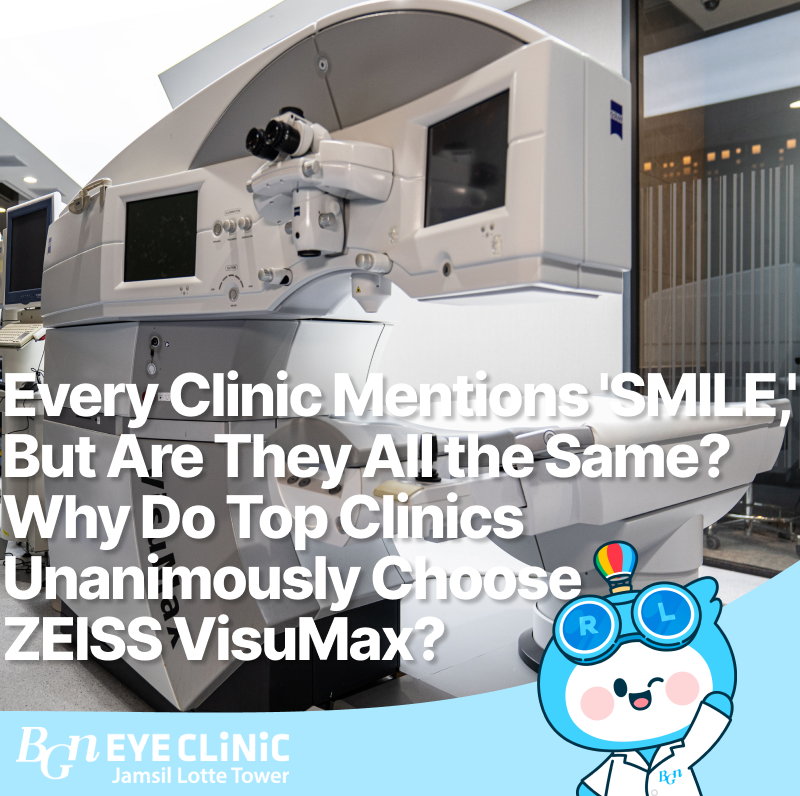
SMILE vs. SMILE Pro: Which Vision Correction Surgery is Best for You?BGN Eye Clinic Jamsil Lotte Tower Hello from BGN Eye Clinic Jamsil Lotte Tower!When preparing this post, we reflected on the question our patients ask most frequently during consultations and clinical exams: "What is the difference between SMILE and SMILE Pro?"Questions like "Is SMILE Pro significantly better?" or "How do the two procedures actually differ?" come up every day. Many patients mention that after watching review videos and reading online comparisons, they ended up feeling even more confused. Today, we will break down the differences between SMILE and SMILE Pro comprehensively, based on the actual explanations we provide in our examination rooms!How SMILE and SMILE Pro Differ from Traditional LASIKSMILE corrects vision by creating a tiny, 2mm incision on the cornea, through which a microscopic tissue layer called a lenticule is carefully removed. Many patients wonder how this technique compares to traditional LASIK.Traditional LASIK requires creating a corneal flap (like a small lid), opening it, and applying a laser beneath the surface. Because of the larger incision area, recovery can take a bit longer, and some temporary discomfort may occur.Key Differences at a GlanceLASIK: Creates a corneal flap before applying the laser treatment.SMILE / SMILE Pro: Operates without a corneal flap, using a minimal 2mm incision to extract the lenticule.By maintaining a drastically smaller incision area, SMILE preserves the structural integrity of the cornea to the highest degree possible. Its exceptionally fast recovery time makes it a preferred choice for active individuals.Understanding VisuMax: The Technology Behind SMILESMILE procedures are performed using state-of-the-art VisuMax femtosecond laser technology developed by ZEISS, a world-leading German optics manufacturer. At BGN Eye Clinic Jamsil Lotte Tower, we take immense pride in operating these advanced, high-precision systems.Some patients ask whether all laser equipment delivers identical results. However, we always emphasize that surgical technology plays a pivotal role in final clinical outcomes. BGN Eye Clinic utilizes genuine ZEISS VisuMax systems that undergo regular, certified maintenance directly from ZEISS headquarters.What Is the Core Difference Between SMILE and SMILE Pro?Both procedures share the exact same underlying surgical principle. The primary distinction lies in the technology upgrade: SMILE Pro utilizes the next-generation VisuMax 800 platform.Key Advantages of VisuMax 800 (SMILE Pro)Significantly Faster Laser Delivery: Laser application time is drastically reduced compared to legacy systems.Automated Precision Alignment: Features advanced centration and astigmatism axis compensation for enhanced precision.Enhanced Patient Comfort: The shortened surgical time substantially minimizes anxiety during the procedure.Is There a Difference in Recovery Time?Both SMILE and SMILE Pro offer exceptionally rapid recovery. A vast majority of our patients comfortably resume their normal routine the day after surgery.However, because laser exposure is noticeably shorter with SMILE Pro, patients frequently report feeling more relaxed during and immediately after the procedure. For individuals with sensitive eyes or higher procedural anxiety, SMILE Pro often provides a smoother overall experience. Nonetheless, personal recovery rates vary depending on individual eye conditions."Rather than asking which surgery is objectively superior, the real question is: Which procedure is right for your unique eyes?"This is the core advice we offer during every consultation. Every patient presents a unique ocular profile including corneal thickness, pupil size, refractive error, and degree of myopia. Furthermore, pain tolerance and comfort levels differ from person to person.Ultimately, personalized care matters more than the surgical title alone. While SMILE Pro may be ideal for patients seeking faster treatment and greater peace of mind, standard SMILE and traditional LASIK also yield outstanding visual outcomes when correctly matched to the patient.The best vision correction procedure is simply the one tailored precisely to your eyes. The team at BGN Eye Clinic Jamsil Lotte Tower remains committed to guiding you toward your safest, clearest vision.BGN Eye Clinic Jamsil Lotte Tower
Why You Should Never Rub Your Eyes When Washing Your Face in the MorningA Guide to Preventing Corneal Damage and Dry Eye Syndrome Hello from BGN Eye Clinic Jamsil Lotte Tower!How many of you head straight to the bathroom sink the moment you wake up? I personally love splashing cold water on my face to wake myself up every morning. However, during consultations, I notice that many people have a habit of rubbing their eyes vigorously while washing up."My eyes feel so stiff in the morning, I instinctively start rubbing them while washing my face.""I feel like I need to give my eyes a good rub before putting in my contact lenses to feel refreshed."We hear statements like these all the time in our examination rooms. But the truth is... rubbing your eyes during your morning wash is far more dangerous than you might think. Today, I will explain why this habit is harmful and share practical, easy-to-follow tips to help you protect your vision.Why Do We Feel the Urge to Rub Our Eyes in the Morning?Everyone has experienced that stiff, dry feeling in their eyes right after waking up. During sleep, tear secretion naturally decreases, causing the surface of the eye to dry out. On top of that, microscopic dust and sleep discharge accumulate around the eyelids overnight, compounding the discomfort.As a result, your hands unconsciously reach for your eyes out of habit. Contact lens wearers experience this morning dryness even more frequently. The real problem is that rubbing it feels soothing in the moment. That false sense of relief makes you do it again and again, until it becomes an everyday habit without you even realizing it.What Happens When You Rub Your Eyes?1. Corneal Scratches and Epithelial DamageThe cornea protecting the front of your eye is incredibly thin (thinner than a single strand of human hair!). Pressing and rubbing your eyes while washing can trap cleansing foam, surface dust, or bacteria against your cornea, causing micro-abrasions. While doing it once or twice may seem harmless, repeated friction can eventually cause blurry vision and sharp light sensitivity.2. Worsening Dry Eye SyndromeYour eyes are already vulnerable and dry when you wake up. Rubbing them breaks down the delicate tear film remaining on the surface, accelerating moisture loss. That momentary feeling of relief is purely a temporary distraction; in reality, it leaves your eyes feeling irritated, stinging, and dry for the rest of the day.3. High Risk of Bacterial InfectionThink about the sweat, dust, and bacteria that accumulate on your hands overnight. If you rub your eyes before properly washing your hands in the morning, you introduce harmful bacteria directly into your eyes. Common complaints like red, itchy eyes often stem from this exact habit, leading to conditions like conjunctivitis or keratitis.4. Spikes in Intraocular Pressure (IOP)Pressing hard on your eyelids causes an immediate spike in intraocular pressure. For individuals with a family history of glaucoma or those at higher risk, this sudden mechanical pressure can place significant stress on the optic nerve. It only takes a few seconds of rubbing to exert unsafe pressure inside the eye structure.5. Risk of KeratoconusChronic eye rubbing can cause the cornea to thin progressively and warp into a cone-like shape, a condition known as keratoconus. This leads to severe visual distortion that cannot be easily corrected with standard glasses, often requiring specialized rigid lenses or surgical intervention down the road.Everyday Situations Where We Unconsciously Rub Our EyesWe often rub our eyes multiple times a day without even realizing it. Though each instance seems minor, the physical irritation builds up over time:Turning off the morning alarm: Pressing hard on the eyelids right after waking up.Washing away water: Firmly rubbing the eyes when water splashes in during a cold wash.Applying or removing makeup: Rubbing the eyelids when product stings or irritates the skin.Fighting off afternoon fatigue: Pressing both hands against the eyes to wake up when drowsy.Handling contact lenses: Rubbing the eyes prior to inserting lenses, which breaks the tear film.A Real Patient Story: A Office Worker in His 20sI remember a male patient in his mid-20s who visited our clinic right after work. His eyes were noticeably bloodshot, and he kept blinking rapidly."My eyes feel extremely dry every morning. I always give them a hard rub before putting in my contact lenses to clear my vision. But lately, no matter how much I rub, my vision stays blurry, and my eyes sting all day long."This is a story we hear all too often. Rubbing the eyes had become an automatic part of his morning routine: wake up, wash face, rub eyes, insert lenses. Upon examination, his tear film was completely unstable, and the surface of his cornea showed micro-friction roughness. Because the area touching his contact lenses was inflamed, inserting lenses only triggered more dryness and stinging, creating a painful cycle.I explained to him, "When contact lens wearers rub their eyes in the morning, it aggravates dryness and creates microscopic scratches on the cornea. Applying a lens over an irritated corneal surface naturally causes significant discomfort." He looked surprised and replied, "I just did it out of habit... I had no idea it was doing this much damage."Expert Advice from Optometrist SubinUse artificial tears first: If your eyes feel stiff in the morning, apply preservative-free artificial tears instead of rubbing.Rinse gently: Do not scrub your eyelids while washing your face; cup water in your hands and gently splash around the eye area.Clean hands before lens insertion: Always wash your hands thoroughly with soap and dry them completely before handling contact lenses.How to Upgrade Your Morning Wash Routine1. Avoid Direct FrictionIf water gets into your eyes while washing, resist the temptation to rub them! Cup clean water in your palms and let it flow gently around your eye area instead.2. Refresh with Artificial TearsIf your eyes feel gritty when you wake up, artificial tears are the answer, not your fingers. A single drop of preservative-free eye drops will make your eyes feel much more comfortable throughout the day.3. Practice Strict Hand Hygiene Before Lens UseHand hygiene is essential. Wash your hands thoroughly with soap and dry them completely with a clean towel before touching your lenses or eyes to prevent bacterial contamination.4. Massage the Surrounding Orbital BoneIf your eyes feel tired, do not press directly on the eyeballs. Instead, lightly press the bony ridge around your eye sockets to relieve tension safely.5. Apply a Warm CompressA 5-minute warm compress in the morning improves blood circulation and helps unblock oil glands in the eyelids, noticeably reducing dry eye symptoms.6. Maintain Indoor HumidityRunning a humidifier or keeping a glass of water near your bed keeps the bedroom air hydrated, preventing severe overnight dryness."Say NO to rubbing your eyes during your morning wash! Gentle care today preserves clear, healthy vision for a lifetime."Corneal abrasions, dry eyes, bacterial infections, elevated IOP, and keratoconus can all stem from a simple eye-rubbing habit. Treating your eyes with care is the single best preventative step you can take.If you want to start your day feeling refreshed, replace eye rubbing with gentle washing and hydrating artificial tears. One small change in your morning habit will protect your eyesight for years to come. Wishing you a clear and healthy day ahead!This has been BGN Eye Clinic Jamsil Lotte Tower.BGN Eye Clinic Jamsil Lotte TowerLotte World Tower, Jamsil-dong, Songpa-gu, Seoul, Republic of Korea
As people enter their 40s, many begin to notice that nearby text becomes blurry or that they have to hold their smartphones farther away. That’s usually the first moment they wonder, “Is this presbyopia?”Presbyopia is a natural age-related condition caused by a loss of elasticity in the eye’s lens. While younger eyes can automatically focus between near and far objects, this ability gradually diminishes over time. As a result, nearby objects such as books or phones appear blurry, and people often find themselves constantly putting on and taking off reading glasses.At this stage, many people start to wonder whether vision correction surgeries like LASIK or LASEK are still possible. In the past, there was a common belief that such procedures were not suitable once presbyopia had begun, causing some to hesitate or give up entirely on the idea of surgery. However, with advancements in technology, it’s now often possible to undergo surgery—even with presbyopia—depending on the condition of your eyes.At BGN Eye Clinic in Jamsil, patients in their 40s and 50s who are considering vision correction surgery are evaluated not just for the goal of removing glasses, but also for achieving clear vision at both near and far distances. Rather than making decisions based on age alone, we prioritize detailed diagnostic tests to determine if the eye’s structure and function are suitable for surgery.We assess various factors including corneal thickness and shape, accommodative ability, lens condition, and lifestyle patterns. Some patients, despite having presbyopia, have eyes healthy enough to undergo vision correction procedures with high satisfaction. In contrast, if early signs of cataracts or severe loss of accommodation are present, a different surgical approach may be more appropriate, highlighting the importance of accurate diagnosis.You might think, “I can just use reading glasses, right?” But many people endure the inconvenience and discomfort of readers for years. Constantly needing to carry reading glasses or switching them on and off throughout the day can lower your quality of life.If vision correction surgery can help reduce these burdens, it may very well be worth considering. Postoperative recovery and visual adaptation vary from person to person, so proper follow-up care is essential. At BGN Eye Clinic in Jamsil, we offer a structured treatment plan from pre-surgery to full recovery. After surgery, we regularly monitor vision changes and progress, and we provide eye drops or lifestyle guidance as needed.Most importantly, having presbyopia doesn’t automatically mean you must give up on vision correction surgery. While your eyes do change with age, age alone shouldn’t determine whether you’re a candidate for surgery. What truly matters is knowing the current condition of your eyes and choosing a treatment path that fits.At BGN Eye Clinic Jamsil, we provide personalized surgical solutions based on age and vision needs, aiming not just to eliminate glasses but to improve overall quality of life. Our detailed diagnostic and consultation systems are especially well-suited for middle-aged patients, offering a comfortable and reassuring experience for first-time visitors.Even if you have presbyopia, don’t assume surgery is no longer an option. With proper diagnostics, vision correction surgery may still be a valid and effective solution.If you’re curious about the condition of your eyes, come to BGN Eye Clinic Jamsil for a detailed exam and professional consultation. We’ll help you start a new chapter—one without reading glasses.
When is the Right Time for Presbyopia Surgery?A Guide to Age-Related Vision Changes and Treatment TimingBy BGN Eye Clinic Jamsil Lotte Tower Hello, this is BGN Eye Clinic located at Jamsil Lotte Tower.These days, so many of us spend our entire day reading small text on smartphones or focusing intensely in front of computer screens. At some point, you might have had an experience like this:"Wait, why is my vision taking longer to focus?""Text looks blurry whenever the lighting is dim."This is no longer something that only happens after age 40. Recently, we see many patients in their late 30s and even late 20s experiencing a gradual decline in their eyes' accommodative power. Prolonged near work, constant digital device use, and lack of sleep accelerate eye fatigue and wear down our natural resilience faster than ever.In our clinic, patients frequently ask us: "Doctor, can I get presbyopia even though I am still young?" or "When should I start considering presbyopia surgery?"Today, we would like to address these exact questions. When is the ideal time for presbyopia surgery, and how does your vision change as you age? Let us break down the process step-by-step across different age groups.When Does Presbyopia Actually Begin?Presbyopia does not happen overnight. Because it progresses quietly and very gradually, most people initially brush it off, thinking, "I must just be tired today."Typically starting around age 40, the natural crystalline lens inside the eye slowly hardens, reducing its ability to focus on close objects. In simple terms, the lens loses its natural elasticity.In your 20s and 30s, the lens is remarkably flexible. Whether reading a book up close or looking at a distant sign, your eyes automatically adjust focus instantly. However, once you enter your 40s, this adjustment speed slows down. That is when subtle changes appear: text becomes harder to read, or you find yourself needing brighter light to see clearly.Common Early Signs of PresbyopiaHolding books or smartphones further away to see clearlyClear vision in bright light, but blurry text in dim environmentsFrequent eye strain and delayed focusing when fatiguedWhile artificial teardrops or temporary reading glasses may offer initial relief, persistent symptoms strongly suggest the early stages of presbyopia. Early evaluations allow you to manage vision health through lifestyle adjustments or customized corrective options before considering surgery. Presbyopia is not a sudden vision disorder, but a natural signal that your eyes need care and rest.Understanding Vision Changes by Age GroupLate 30s : "Why is my focus delayed?""Does presbyopia not start in your 40s?" This is the most common question we hear from patients in their late 30s. Today, with continuous usage of smartphones, monitors, and tablets, accommodation fatigue sets in much earlier than in the past.Even if you are young, eye muscles undergo constant zooming in and out every day, leading to muscle stiffness and reduced focusing speed. As a result, you may experience moments where the screen suddenly blurs or text appears doubled for a brief second.Checkpoints for This StageSmartphone screens momentarily blur before coming into focusReading or reviewing documents causes fast eye fatigueFrequent dryness, stinging, or eye tensionIf these symptoms happen frequently, it may indicate the early onset of presbyopia rather than simple fatigue. While it is too early for surgery, we recommend scheduling regular vision checks, taking eye care supplements such as Lutein and Omega-3, and practicing the 20-20-20 rule (resting your eyes for 20 seconds after 20 minutes of near work). These small habits can effectively slow down progression.Early to Mid-40s : "Do I need reading glasses?"From this stage, many patients notice noticeable shifts in near vision. Reading fine print becomes blurry, and brighter ambient light becomes necessary for clarity. Whether checking work documents or phone notifications, you may catch yourself struggling to read small text multiple times a day.Focusing becomes harder at night or when tired, accompanied by frequent eye strain. This is a clear indicator that your eyes' accommodative ability is declining.Checkpoints for This StageTilting your head back to find focus when readingClear vision in bright lighting, but blurriness in dark settingsNear-distance fatigue, glare, or double-focusing sensationsThis is the appropriate time to actively evaluate presbyopia correction. Because the lens has not completely hardened yet, corneal-based presbyopia laser treatments (such as PresbyLASIK or Presbyopic LASIK) can restore clear vision for both near and far distances. Surgery is not immediately necessary for everyone; however, if eye strain becomes severe or reading glasses feel inconvenient, a comprehensive examination is the best starting point.50s and Beyond : "Addressing Presbyopia and Cataracts Together"After age 50, lens elasticity is largely lost, and transparency begins to decrease, often accompanying the early stages of cataracts. Consequently, presbyopia and cataracts frequently progress together. If reading glasses no longer provide clarity, or if you experience severe glare in sunlight or light scattering while driving at night, lens clouding may already be underway.Checkpoints for This StageSignificant eye glare under daylight conditionsSevere light halos or glare during night drivingText remains unclear even when using reading glassesAt this stage, multifocal intraocular lens (IOL) implantation, which corrects both presbyopia and cataracts simultaneously, is highly effective. A single procedure addresses both conditions and significantly reduces reliance on reading glasses, delivering high satisfaction for daily activities such as reading, using smartphones, and driving.So, When Exactly Should You Consider Surgery?Many patients ask us: "Doctor, I think presbyopia has started... should I get surgery now?" or "Should I wait a bit longer?" The right time for presbyopia surgery is not determined by age alone. A 45-year-old office worker sitting at a screen all day has entirely different visual demands compared to someone who works outdoors. Ultimately, the decision depends on your degree of discomfort and how much it impacts your daily life.Consider surgery if you experience the following:Difficulty reading smartphones or books without reading glassesFrequent loss of focus when reviewing documents or fine printPersistent eye strain, headaches, or recurring visual dimnessSevere night driving glare or light halosOngoing inconvenience from constantly putting on and taking off glassesIf these symptoms persist, it is time to evaluate corrective options. Advanced diagnostic equipment allows for precise, multi-dimensional analysis of corneal thickness, lens transparency, tear film stability, and pupil size. Based on these measurements, personalized solutions ranging from LASIK/SMILE Pro-based presbyopia laser treatments to multifocal IOL procedures can be planned. Instead of asking "When should I do it?", focus on discussing "Which method best suits my eye condition right now?" with a qualified specialist.A Quick Tip for Daily Eye CareIf you are hesitating about surgery, ensure proper lighting when reading or using digital devices, and remember to blink regularly. Taking a 10-minute eye rest daily helps relieve eye strain and maintain healthy vision habits.Three Essential Factors to Check Before Presbyopia SurgeryBefore deciding on presbyopia surgery, accurately understanding your eye health is essential. Because surgical options vary, matching the procedure to your specific ocular structure yields the best results.1) Crystalline Lens Condition : Checking for CataractsWhile presbyopia results from loss of lens elasticity, cataracts involve physical clouding of the lens. If both conditions are present, multifocal IOL replacement is far more beneficial than corneal laser correction alone.2) Corneal Thickness and Shape : Assessing Structural SuitabilityIf your cornea is thin or irregular, lens-based correction offers a safer choice over corneal laser procedures like LASIK or SMILE Pro. Conversely, healthy corneal parameters allow for rapid recovery using non-incisional laser techniques.3) Tear Film Stability : Evaluating Dry Eye SymptomsDryness or stinging can influence post-operative healing. Assessing dry eye severity using pre-examination tests like tear film stability and Meibomian gland evaluation (e.g., K5M) ensures a safer treatment plan.Advanced diagnostic tools such as IOL Master, Pentacam, OQAS, and LipiView allow us to thoroughly evaluate refractive errors, lens conditions, and tear film health. Our optometrists and specialists will carefully guide you through all examination findings.Presbyopia is a natural change, but proactive care minimizes discomfort and preserves clear vision. Remember these three key phases: monitor accommodative changes in your late 30s, evaluate focus blur in your 40s, and check for cataract progression after age 50.Healthy vision relies on consistent management. Rather than putting off care, take the step to evaluate your eyes today to maintain clear, comfortable sight for years to come.
What Is the 'Real' Recovery Process for Presbyopia Surgery?Hello,This is the main branch of BGN Eye Clinic at Jamsil Lotte World Tower.Today, as soon as I turned on my computer at work, the first thing that attacked my eyes wasn't a patient's inquiry, but a freshly steamed sweet potato."No snacks today," "I need to manage my weight," "Let's reduce swelling..." I had pledged to myself three times on my way to work. But what happened? The moment I arrived at the clinic, a fellow nurse silently left a sweet potato on my desk. I lasted barely three seconds.In the end, peeling and eating it quietly by myself, I muttered internally, "Well... a boiled sweet potato should be fine, right...? This isn't a snack... it's dietary fiber..."While I was rationalizing it all by myself, a patient carefully opened the door and came in at that exact moment. "Optometrist, your consultation last time was so helpful. I'm considering presbyopia surgery and stopped by to ask one more thing."Ah... The moment I heard those words, my guilt over chewing on that sweet potato vanished in an instant. (The power of psychological compensation... truly amazing.)"How long does presbyopia surgery recovery actually take?"When conducting presbyopia consultations, the very first question is always identical: "Recovery doesn't take too long, does it?" Remarkably, regardless of age or profession, everyone asks this exact question with one mind and heart.When searching for information about presbyopia, people come in feeling quite terrified because they see anxious reviews, exaggerated headlines, and extreme anecdotes first. The patient I consulted today was the same. "Lately, I can't read small print at all... but I was worried I wouldn't be able to function for days if I got surgery..." Tension was evident throughout their voice.So, looking right at the patient, I began explaining like this: "I completely understand what you're worried about. But in reality, it is much faster than 'that recovery period' patients usually imagine."Since I observe real cases all day long, I explained it strictly from a realistic standpoint. Watching the patient lean back comfortably into their chair, I broke it down step-by-step once again.Presbyopia Surgery Recovery, Broken Down Step-by-Step...1) The Day of Surgery - "Huh? This is much less burdensome than I thought?"When you stand up right after surgery, the first thing you feel is that unfamiliar sensation: "Wait... did I really just have surgery?" Your vision might be slightly blurry, and you may feel a mild stinging when exposed to bright lights, but most patients express that it's far more comfortable than they anticipated.Before entering the operating room, patients worry with questions like, "What if it hurts during surgery...?" or "I heard recovery is really tough..." However, once it's over, the general reaction is, "This isn't just tolerable, it's totally fine!" There is virtually no pain to speak of; it feels more like a light, unfamiliar coating resting over your eyes. As long as you avoid straining to open your eyes wide or overusing them, the day passes relatively smoothly.2) The Next Day - A surprisingly large number of people return to daily lifeWhen visiting the clinic the next day, almost every patient says something like this: "I can see so much better than yesterday! Near objects are already looking clear!"Checking text messages on smartphones, reading book titles, and answering simple work emails, short-range activities improve significantly from this point onward. Of course, some patients note, "It's better than yesterday, but not 100% sharp yet," which is a completely natural part of the healing journey. In fact, many working professionals return to work the very next day. As long as long hours of intense focus are avoided, it is entirely manageable.3) Weeks 1 to 2 - Focus Stabilization Stage (The period most people wonder about)This is the phase where patients feel most confused. It's because clear distances and awkward distances coexist simultaneously. For instance, near vision might be sharp while intermediate distances fluctuate unpredictably, or distant vision is fine while book text suddenly appears hazy.However, this is not abnormal at all; it is a standard adaptive process as your eyes adjust to their new focus settings. Because it reactivates near and intermediate adjustments that weren't used previously, the stabilization speed varies slightly per individual. On average, most people begin feeling that their vision has grown significantly more comfortable between weeks 1 and 2.4) One Month Mark - The period you realize, "Ah, this is why everyone gets it done"Once exactly one month has passed, almost everyone says the exact same thing: "It has become so convenient," "Switching back and forth between reading a book and looking at a computer screen feels so natural," "I can lock my focus quickly while driving now!"At this stage, work, reading, driving, and smartphone usage are all completely fine. Every eye-related activity becomes far more natural, and focus transitions smoothly, almost like your original eyes. You will personally feel the smooth connection across near, intermediate, and distance vision. Satisfaction reaches its peak during this period.The Core of Presbyopia Surgery I Realize Daily Through ConsultationsWhen patients hesitate over presbyopia surgery, their biggest concern is surprisingly not the surgery itself, but anxiety stemming from a lack of information. Once inside the operating room, many realize, "Ah... it wasn't a big deal after all," but prior to that, tension and fear build up significantly due to internet searches and word of mouth.💡 Heartfelt Advice from Nurse Seong-hye"What truly determines recovery speed is actually your ocular condition and lifestyle patterns, rather than the surgery itself. Accurately assessing your eye health, screen time, and workload involving near vision allows us to select the optimal surgical approach, leading to a much smoother recovery than expected."The patient I consulted today was no exception. At first, their expression was stiff, worrying, "If recovery takes too long, it will interfere with my schedule..." So, I calmly walked them through their eye condition, lifestyle patterns, and the step-by-step recovery process. As they listened, I could see their facial expression gradually soften.Finally, they said, "Ah... I was worried for nothing. This won't disrupt my schedule at all."In that moment, I nodded silently once more. Exactly. People feel far more anxious about the vague fear of the unknown than the actual procedure. Whenever we guide them accurately and explain both the recovery stages and realistic lifestyle adjustments, their anxiety drops significantly every single time.Closing thoughtsAre you currently experiencing eye fatigue when reading small print, looking at a book, or checking your smartphone due to presbyopia? If reviewing documents at work is becoming stressful and daily inconveniences are piling up, you don't have to worry alone.What matters most at this point is thoroughly examining your precise eye condition, lifestyle habits, and work demands. Rather than simply enduring the discomfort or deciding based solely on rumors, consulting with a specialist to find the method best suited for you dictates your recovery speed. Let us help you find the tailored choice that restores crisp, clear vision to your daily life.
For many people, poor eyesight isn’t just an inconvenience—it affects confidence, daily comfort, and overall quality of life. Aaron Vu, who traveled from San Jose, California, is one such patient who had been living with severely reduced vision and significant astigmatism for many years.Like many patients, Aaron couldn’t recall the exact numbers of his prescription. What he did remember clearly, however, was how limiting his vision had been before surgery. Glasses and contact lenses were a constant necessity, and daily activities required extra effort and adjustment.After careful consultation and examination at BGN Eye Clinic, Aaron proceeded with vision correction surgery tailored to his eye condition. The procedure itself took approximately 15 minutes, and the recovery process was remarkably smooth. Within half a day, he noticed a dramatic improvement in his vision.What stood out most to Aaron wasn’t only the visual outcome, but also the experience throughout the process. Despite having a strong fear of needles and medical procedures, he shared that he felt calm and reassured from start to finish. The medical staff explained each step clearly, and the procedure progressed quickly and efficiently.“I remember going in, getting numbed, and before I knew it, it was already over,” he recalled.Today, Aaron can see clearly without glasses or contact lenses, something that once felt out of reach. He described his overall experience at BGN Eye Clinic as extremely positive, highlighting the attentive customer service and the professionalism of the doctors, who made him feel comfortable and confident throughout his visit.This case reflects an important point: successful vision correction is not only about advanced technology, but also about precise diagnosis, individualized treatment planning, and patient-centered care. At BGN Eye Clinic, each patient’s eye condition, lifestyle, and concerns are carefully considered to achieve stable and satisfying outcomes. Aaron’s journey is a reminder that even patients with complex vision issues and high astigmatism can experience meaningful improvements—when guided by thorough examinations and experienced medical professionals.📞 Tel: 010-3435-5770 (KakaoTalk, WhatsApp available)📧 Email: info@bgneyeclinic.comWebsite: bgneyeclinic.comAddress: Lotte World Tower, 11th Floor, 300 Olympic Road, Songpa-gu, Seoul, Korea#SMILEPro #LaserEyeSurgery #VisionCorrection #ClearVision #EyeSurgery #MyopiaTreatment #AstigmatismCorrection #NoMoreGlasses #NoMoreContacts #EyeCare #BGNEyeClinic #ZeissTechnology #SeoulEyeClinic #ExpertSurgeons #InternationalPatients #MedicalTourismKorea #SafeEyeSurgery#SafeEyeSurgery
For many people who wear glasses, clearer vision is something they hope for—but don’t always believe is possible. Jacob Silverman was one of those people. After years of relying on glasses, he came to BGN Eye Clinic looking for something better, clearer, and more advanced.Jacob chose Smile Pro, a next-generation vision correction procedure that had caught his attention as a newer option compared to traditional LASIK. From the beginning, he knew this was the procedure he was hoping to get—and after surgery, the results exceeded his expectations.What surprised him most wasn’t just that his vision improved, but how much better it felt compared to wearing glasses. He shared that he can now see better than he ever did with glasses on, something he found genuinely exciting.“Everything’s been so clear,” Jacob said. “Compared to glasses… I can’t even explain how much better it is.”One of the most meaningful parts of his experience was the support he received throughout the process. From consultation to post-procedure care, the staff carefully walked him through every step, making sure he understood what was happening and felt comfortable at all times. That sense of guidance helped turn what could have been a stressful experience into a reassuring one.Jacob also noted how Smile Pro compares to LASIK. While every patient’s situation is different, he shared that based on what he had been told and what he experienced, Smile Pro felt like a much more advanced and satisfying option for him.After the procedure, the change in vision wasn’t subtle. Jacob described it as gaining a kind of “extra vision”—clarity he hadn’t experienced in a very long time. Simple, everyday moments now felt sharper, brighter, and more vivid.“It’s fantastic,” he said. “I have all this extra vision I’ve never really experienced in so long.”Jacob’s case highlights something important: modern vision correction isn’t just about removing glasses—it’s about restoring clarity, comfort, and confidence. With careful evaluation, advanced technology like Smile Pro, and attentive medical care, patients can rediscover what truly clear vision feels like. At BGN Eye Clinic, patient experiences like Jacob’s remind us why individualized care and thoughtful communication matter just as much as the procedure itself.#SMILEPro #LaserEyeSurgery #VisionCorrection #ClearVision #EyeSurgery #MyopiaTreatment #AstigmatismCorrection #NoMoreGlasses #NoMoreContacts #EyeCare #BGNEyeClinic #ZeissTechnology #SeoulEyeClinic #ExpertSurgeons #InternationalPatients #MedicalTourismKorea #SafeEyeSurgery📞 Tel: 010-3435-5770 (KakaoTalk, WhatsApp available) 📧 Email: info@bgneyeclinic.com Website: bgneyeclinic.com Address: Lotte World Tower, 11th Floor, 300 Olympic Road, Songpa-gu, Seoul, Korea
Smile Pro Experience at BGN Eye ClinicA Patient Testimonial from San Francisco, USA When Alex Leone traveled from San Francisco to Korea, he arrived with minimal expectations and only a recommendation from a friend. However, after completing his Smile Pro procedure and follow-up care at BGN Eye Clinic, he quickly understood why so many international patients choose this clinic for their vision correction. Alex explains that he initially decided to visit simply because someone he trusted had recommended the clinic. Although he did not know what to expect, the professionalism and organization he encountered immediately reassured him. From the moment he walked in, the staff made sure he felt welcomed, informed, and supported throughout each stage of the process. One of the aspects that stood out to Alex was the thoroughness and structure of the patient journey. Every step—from the initial examination and consultation to the surgery preparation and recovery—was clearly explained. He noted that the team guided him through the entire experience and helped him feel comfortable at all times. Smile Pro is known for its speed, precision, and minimally invasive technique, but for Alex, the human side of the experience was equally important. He emphasized that even during the procedure itself, the medical team remained attentive and made sure he felt safe and cared for. This level of support helped alleviate any anxiety and contributed to a smooth surgical experience. Alex also highlighted that the high standard of care continued after the surgery. During the 24-hour follow-up visit, he found that the staff remained just as welcoming and attentive as they had been on the day of the procedure. Based on this consistent level of care, he described his experience as “five stars.” Reflecting on his time at the clinic, Alex shared that he would confidently recommend BGN Eye Clinic to anyone considering Smile Pro surgery. His experience demonstrated the clinic’s commitment to professionalism, patient comfort, and high-quality outcomes. BGN Eye Clinic continues to be a trusted choice for patients seeking effective and reliable vision correction. With advanced technology, experienced surgeons, and a comprehensive patient-care system, the clinic provides a safe and supportive environment for both local and international patients. For consultation inquiries or appointment scheduling, please contact us through the official website.For an accurate price range, please get a consultation:📞 Tel: 010-3435-5770 (KakaoTalk, WhatsApp available)📧 Email: info@bgneyeclinic.comWebsite: bgneyeclinic.comAddress: Lotte World Tower, 11th Floor, 300 Olympic Road, Songpa-gu, Seoul, Korea#SMILEPro #LaserEyeSurgery #VisionCorrection #ClearVision #EyeSurgery #MyopiaTreatment #AstigmatismCorrection #NoMoreGlasses #NoMoreContacts #EyeCare #BGNEyeClinic #ZeissTechnology #SeoulEyeClinic #ExpertSurgeons #InternationalPatients #MedicalTourismKorea #SafeEyeSurgery#SafeEyeSurgery
“Feeling Safe, Heard, and Supported — Sun Win’s Vision Correction Journey at BGN Eye Clinic”When Sun Win first began considering vision correction, the decision wasn’t about big change or transformation.It was about something simple and important: comfort, confidence, and trust.“Overall, I had a very safe and very comfortable experience.”From the first consultation, what stood out most to Sun Win was how thorough and clear the explanations were.Instead of rushing into a decision, the medical team carefully walked through each treatment package, step by step — what was included, why it mattered, and what kind of support would follow afterward. Choosing Comfort & CareAmong the available options, Sun Win chose the most comprehensive care plan, which included additional dry eye support after the procedure.This was particularly meaningful — because dryness can be a concern for many people after vision correction, and knowing there would be post-procedure comfort care provided reassurance.“The post-treatment for dry eyes really helped me feel comfortable.”This wasn’t just a physical treatment.It was emotional comfort — feeling seen, supported, and understood.Support Beyond LanguageOne detail Sun Win mentioned was how the optometry team supported them despite a language barrier.Not speaking Korean could have made the process stressful — but instead, the team made sure communication was clear, gentle, and never rushed.“The team was always supportive, even though I don’t speak Korean.”Small gestures can make a big difference — and in this case, they made the journey feel safe. A Recommendation From Experience, Not AdvertisingSun Win didn’t talk about dramatic change or big words.Just something simple and genuine:“It’s something that I would definitely recommend if you have the opportunity to come here and have a vision correction procedure.”No pressure.No exaggeration.Just one person sharing their experience.And sometimes — the most meaningful stories are exactly like that. A Gentle ReminderEvery patient’s eyes are unique — and so are their experiences.What matters most is choosing a clinic where you feel supported, listened to, and cared for throughout the journey.#BGN Eye Clinic #vision correction in Korea #Korea eye clinic review#expat eye clinic Korea #comfortable vision correction experience #dry eye care after surgery #patient experience BGN Eye Clinic#ophthalmology clinic Korea #vision correction consultation Korea\📞 Tel: 010-3435-5770 (KakaoTalk, WhatsApp available) 📧 Email: info@bgneyeclinic.com Website: bgneyeclinic.com Address: Lotte World Tower, 11th Floor, 300 Olympic Road, Songpa-gu, Seoul, Korea #SMILEPro #LaserEyeSurgery #VisionCorrection #ClearVision #EyeSurgery #MyopiaTreatment #AstigmatismCorrection #NoMoreGlasses #NoMoreContacts #EyeCare #BGNEyeClinic #ZeissTechnology #SeoulEyeClinic #ExpertSurgeons #InternationalPatients #MedicalTourismKorea
Lasik Surgery in Seoul — My SMILE Experience at BGN Eye Clinic Hi! I’m Fah, 35 years old, and I came all the way from Perth, Western Australia, to Seoul — not for sightseeing, but for something that truly changed my life: getting my eyes corrected.Like many people who spend hours staring at screens, I had been thinking about vision correction for years. After doing some research online, BGN Eye Clinic immediately caught my attention. Their reputation, technology, and friendly communication made me feel confident even before stepping into Korea. Booking Was So SimpleI was amazed at how easy it was to schedule everything. I just contacted the clinic on KakaoTalk, and they guided me through the entire process — no stress, no confusion. Everything felt smooth, fast, and well-organized, which is a huge relief when you’re traveling overseas for medical care.Quick, Clear, and Comfortable TestingAll the pre-surgery tests were done quickly and efficiently. What impressed me most was how phone-friendly the process was — I didn’t have to worry about paperwork or complicated forms. The staff explained each step clearly and made sure I was comfortable throughout. The Surgery Day — Fast and PainlessWhen the big day arrived, I was a little nervous (who wouldn’t be?), but the doctors and staff were incredibly kind and approachable. They explained everything in detail, which helped me relax. The actual SMILE surgery? It was over before I even realized it! Smooth, quick, and absolutely pain-free.Recovery That Surprised MeWhat truly amazed me was how fast I recovered. I could go out the very next day, walking around Seoul and seeing everything so clearly. There was no discomfort — just pure excitement at finally having sharp, natural vision.Totally Worth ItComing to Seoul for this procedure was one of the best decisions I’ve ever made. The experience was easy, safe, and genuinely life-changing. If you’re considering SMILE or LASIK surgery abroad, I can’t recommend BGN Eye Clinic enough. They made the entire journey — from booking to recovery — seamless and stress-free.Seeing the world clearly again is priceless, but if you’re wondering whether it’s worth the trip to Korea… trust me, it absolutely is.#BGNEyeClinic #SMILESurgery #LasikInKorea #VisionCorrection #EyeSurgeryKorea #SMILEPro #SeoulClinic #MedicalTourismKorea #KoreaHealthCare #EyeSurgeryExperience #ClearVision #LifeChangingMoment #TravelForHealth #SeoulJourney #LasikSurgeryReview #SMILEEyeSurgery #KoreaLasik #VisionRestored #BGNClinic #SMILEProKorea📞 Tel: 010-3435-5770 (KakaoTalk, WhatsApp available) 📧 Email: info@bgneyeclinic.com Website: bgneyeclinic.com Address: Lotte World Tower, 11th Floor, 300 Olympic Road, Songpa-gu, Seoul, Korea
“From glasses to clear vision — my journey with BGN Eye Clinic in Lotte Tower.”Discovering the Right Clinic in SeoulHello, my name is Taylor, and I’m from Colorado, USA. I had been wearing glasses since I was about eight or nine years old, and honestly, I never really loved them. I always dreamed of waking up and seeing the world clearly without reaching for my glasses first thing in the morning.When I finally decided to look into vision correction surgery, I started researching LASIK and SMILE eye surgery in Korea. I compared a few clinics online, but what stood out to me about BGN Eye Clinic was the detailed information on their website, the professional reviews, and how transparent they were about every step of the process. That gave me the confidence to reach out.Choosing SMILE Pro (Triple Pro Smile)A friend of mine had traveled to Seoul before and had LASIK done — they couldn’t stop talking about how smooth everything went. After hearing their story, I thought, why not me? So I decided to go for Triple Pro Smile, the latest generation of SMILE LASIK surgery offered at BGN Eye Clinic, located in the tallest building in Seoul — Lotte World Tower.The Day of SurgeryI arrived at the clinic around 10 in the morning and finished everything by early afternoon. The process was incredibly efficient. From the moment I walked in, the staff recognized how nervous I was and did an amazing job calming me down. They guided me through each step — from the detailed eye examination to the actual SMILE Pro procedure — with such care and professionalism.Honestly, I was surprised by how quick and comfortable the surgery was. The entire procedure was over before I even had time to overthink it!Clear Vision, Same DayAfter the surgery, the post-op instructions were clear and easy to follow. By evening, I could already notice my vision improving, enough to walk around and enjoy the city lights of Seoul without glasses for the first time in my life. It was surreal.My Honest ReviewIf you’re considering SMILE LASIK or SMILE Pro in Korea, I can say from experience — it’s worth it. The combination of cutting-edge ZEISS technology and caring medical staff at BGN Eye Clinic made all the difference.Whether you’re struggling with dry eyes, astigmatism, or just tired of glasses and contact lenses, SMILE Pro eye surgery can truly change your daily life.Final ThoughtsTraveling all the way from the U.S. to Seoul for eye surgery might sound daunting, but for me, it was one of the best decisions I’ve ever made. The BGN team made it feel effortless — from consultation to recovery. If you’ve been searching for the best LASIK clinic in Korea or wondering “Is SMILE LASIK safe?” or “How fast is the recovery after SMILE Pro?” — take it from me: the results speak for themselves.#MedicalTourismKorea #LASIKAbroad #KoreaVisionCorrection #EyeSurgeryAbroad #TravelForLASIK #BestEyeClinicSeoul #KoreanEyeClinic #InternationalPatientsWelcome📞 Tel: 010-3435-5770 (KakaoTalk, WhatsApp available) 📧 Email: info@bgneyeclinic.comWebsite: bgneyeclinic.com Address: Lotte World Tower, 11th Floor, 300 Olympic Road, Songpa-gu, Seoul, Korea
For many people, poor eyesight isn’t just an inconvenience—it affects confidence, daily comfort, and overall quality of life. Aaron Vu, who traveled from San Jose, California, is one such patient who had been living with severely reduced vision and significant astigmatism for many years.Like many patients, Aaron couldn’t recall the exact numbers of his prescription. What he did remember clearly, however, was how limiting his vision had been before surgery. Glasses and contact lenses were a constant necessity, and daily activities required extra effort and adjustment.After careful consultation and examination at BGN Eye Clinic, Aaron proceeded with vision correction surgery tailored to his eye condition. The procedure itself took approximately 15 minutes, and the recovery process was remarkably smooth. Within half a day, he noticed a dramatic improvement in his vision.What stood out most to Aaron wasn’t only the visual outcome, but also the experience throughout the process. Despite having a strong fear of needles and medical procedures, he shared that he felt calm and reassured from start to finish. The medical staff explained each step clearly, and the procedure progressed quickly and efficiently.“I remember going in, getting numbed, and before I knew it, it was already over,” he recalled.Today, Aaron can see clearly without glasses or contact lenses, something that once felt out of reach. He described his overall experience at BGN Eye Clinic as extremely positive, highlighting the attentive customer service and the professionalism of the doctors, who made him feel comfortable and confident throughout his visit.This case reflects an important point: successful vision correction is not only about advanced technology, but also about precise diagnosis, individualized treatment planning, and patient-centered care. At BGN Eye Clinic, each patient’s eye condition, lifestyle, and concerns are carefully considered to achieve stable and satisfying outcomes. Aaron’s journey is a reminder that even patients with complex vision issues and high astigmatism can experience meaningful improvements—when guided by thorough examinations and experienced medical professionals.📞 Tel: 010-3435-5770 (KakaoTalk, WhatsApp available)📧 Email: info@bgneyeclinic.comWebsite: bgneyeclinic.comAddress: Lotte World Tower, 11th Floor, 300 Olympic Road, Songpa-gu, Seoul, Korea#SMILEPro #LaserEyeSurgery #VisionCorrection #ClearVision #EyeSurgery #MyopiaTreatment #AstigmatismCorrection #NoMoreGlasses #NoMoreContacts #EyeCare #BGNEyeClinic #ZeissTechnology #SeoulEyeClinic #ExpertSurgeons #InternationalPatients #MedicalTourismKorea #SafeEyeSurgery#SafeEyeSurgery
For many people who wear glasses, clearer vision is something they hope for—but don’t always believe is possible. Jacob Silverman was one of those people. After years of relying on glasses, he came to BGN Eye Clinic looking for something better, clearer, and more advanced.Jacob chose Smile Pro, a next-generation vision correction procedure that had caught his attention as a newer option compared to traditional LASIK. From the beginning, he knew this was the procedure he was hoping to get—and after surgery, the results exceeded his expectations.What surprised him most wasn’t just that his vision improved, but how much better it felt compared to wearing glasses. He shared that he can now see better than he ever did with glasses on, something he found genuinely exciting.“Everything’s been so clear,” Jacob said. “Compared to glasses… I can’t even explain how much better it is.”One of the most meaningful parts of his experience was the support he received throughout the process. From consultation to post-procedure care, the staff carefully walked him through every step, making sure he understood what was happening and felt comfortable at all times. That sense of guidance helped turn what could have been a stressful experience into a reassuring one.Jacob also noted how Smile Pro compares to LASIK. While every patient’s situation is different, he shared that based on what he had been told and what he experienced, Smile Pro felt like a much more advanced and satisfying option for him.After the procedure, the change in vision wasn’t subtle. Jacob described it as gaining a kind of “extra vision”—clarity he hadn’t experienced in a very long time. Simple, everyday moments now felt sharper, brighter, and more vivid.“It’s fantastic,” he said. “I have all this extra vision I’ve never really experienced in so long.”Jacob’s case highlights something important: modern vision correction isn’t just about removing glasses—it’s about restoring clarity, comfort, and confidence. With careful evaluation, advanced technology like Smile Pro, and attentive medical care, patients can rediscover what truly clear vision feels like. At BGN Eye Clinic, patient experiences like Jacob’s remind us why individualized care and thoughtful communication matter just as much as the procedure itself.#SMILEPro #LaserEyeSurgery #VisionCorrection #ClearVision #EyeSurgery #MyopiaTreatment #AstigmatismCorrection #NoMoreGlasses #NoMoreContacts #EyeCare #BGNEyeClinic #ZeissTechnology #SeoulEyeClinic #ExpertSurgeons #InternationalPatients #MedicalTourismKorea #SafeEyeSurgery📞 Tel: 010-3435-5770 (KakaoTalk, WhatsApp available) 📧 Email: info@bgneyeclinic.com Website: bgneyeclinic.com Address: Lotte World Tower, 11th Floor, 300 Olympic Road, Songpa-gu, Seoul, Korea
Smile Pro Experience at BGN Eye ClinicA Patient Testimonial from San Francisco, USA When Alex Leone traveled from San Francisco to Korea, he arrived with minimal expectations and only a recommendation from a friend. However, after completing his Smile Pro procedure and follow-up care at BGN Eye Clinic, he quickly understood why so many international patients choose this clinic for their vision correction. Alex explains that he initially decided to visit simply because someone he trusted had recommended the clinic. Although he did not know what to expect, the professionalism and organization he encountered immediately reassured him. From the moment he walked in, the staff made sure he felt welcomed, informed, and supported throughout each stage of the process. One of the aspects that stood out to Alex was the thoroughness and structure of the patient journey. Every step—from the initial examination and consultation to the surgery preparation and recovery—was clearly explained. He noted that the team guided him through the entire experience and helped him feel comfortable at all times. Smile Pro is known for its speed, precision, and minimally invasive technique, but for Alex, the human side of the experience was equally important. He emphasized that even during the procedure itself, the medical team remained attentive and made sure he felt safe and cared for. This level of support helped alleviate any anxiety and contributed to a smooth surgical experience. Alex also highlighted that the high standard of care continued after the surgery. During the 24-hour follow-up visit, he found that the staff remained just as welcoming and attentive as they had been on the day of the procedure. Based on this consistent level of care, he described his experience as “five stars.” Reflecting on his time at the clinic, Alex shared that he would confidently recommend BGN Eye Clinic to anyone considering Smile Pro surgery. His experience demonstrated the clinic’s commitment to professionalism, patient comfort, and high-quality outcomes. BGN Eye Clinic continues to be a trusted choice for patients seeking effective and reliable vision correction. With advanced technology, experienced surgeons, and a comprehensive patient-care system, the clinic provides a safe and supportive environment for both local and international patients. For consultation inquiries or appointment scheduling, please contact us through the official website.For an accurate price range, please get a consultation:📞 Tel: 010-3435-5770 (KakaoTalk, WhatsApp available)📧 Email: info@bgneyeclinic.comWebsite: bgneyeclinic.comAddress: Lotte World Tower, 11th Floor, 300 Olympic Road, Songpa-gu, Seoul, Korea#SMILEPro #LaserEyeSurgery #VisionCorrection #ClearVision #EyeSurgery #MyopiaTreatment #AstigmatismCorrection #NoMoreGlasses #NoMoreContacts #EyeCare #BGNEyeClinic #ZeissTechnology #SeoulEyeClinic #ExpertSurgeons #InternationalPatients #MedicalTourismKorea #SafeEyeSurgery#SafeEyeSurgery
“Feeling Safe, Heard, and Supported — Sun Win’s Vision Correction Journey at BGN Eye Clinic”When Sun Win first began considering vision correction, the decision wasn’t about big change or transformation.It was about something simple and important: comfort, confidence, and trust.“Overall, I had a very safe and very comfortable experience.”From the first consultation, what stood out most to Sun Win was how thorough and clear the explanations were.Instead of rushing into a decision, the medical team carefully walked through each treatment package, step by step — what was included, why it mattered, and what kind of support would follow afterward. Choosing Comfort & CareAmong the available options, Sun Win chose the most comprehensive care plan, which included additional dry eye support after the procedure.This was particularly meaningful — because dryness can be a concern for many people after vision correction, and knowing there would be post-procedure comfort care provided reassurance.“The post-treatment for dry eyes really helped me feel comfortable.”This wasn’t just a physical treatment.It was emotional comfort — feeling seen, supported, and understood.Support Beyond LanguageOne detail Sun Win mentioned was how the optometry team supported them despite a language barrier.Not speaking Korean could have made the process stressful — but instead, the team made sure communication was clear, gentle, and never rushed.“The team was always supportive, even though I don’t speak Korean.”Small gestures can make a big difference — and in this case, they made the journey feel safe. A Recommendation From Experience, Not AdvertisingSun Win didn’t talk about dramatic change or big words.Just something simple and genuine:“It’s something that I would definitely recommend if you have the opportunity to come here and have a vision correction procedure.”No pressure.No exaggeration.Just one person sharing their experience.And sometimes — the most meaningful stories are exactly like that. A Gentle ReminderEvery patient’s eyes are unique — and so are their experiences.What matters most is choosing a clinic where you feel supported, listened to, and cared for throughout the journey.#BGN Eye Clinic #vision correction in Korea #Korea eye clinic review#expat eye clinic Korea #comfortable vision correction experience #dry eye care after surgery #patient experience BGN Eye Clinic#ophthalmology clinic Korea #vision correction consultation Korea\📞 Tel: 010-3435-5770 (KakaoTalk, WhatsApp available) 📧 Email: info@bgneyeclinic.com Website: bgneyeclinic.com Address: Lotte World Tower, 11th Floor, 300 Olympic Road, Songpa-gu, Seoul, Korea #SMILEPro #LaserEyeSurgery #VisionCorrection #ClearVision #EyeSurgery #MyopiaTreatment #AstigmatismCorrection #NoMoreGlasses #NoMoreContacts #EyeCare #BGNEyeClinic #ZeissTechnology #SeoulEyeClinic #ExpertSurgeons #InternationalPatients #MedicalTourismKorea
Lasik Surgery in Seoul — My SMILE Experience at BGN Eye Clinic Hi! I’m Fah, 35 years old, and I came all the way from Perth, Western Australia, to Seoul — not for sightseeing, but for something that truly changed my life: getting my eyes corrected.Like many people who spend hours staring at screens, I had been thinking about vision correction for years. After doing some research online, BGN Eye Clinic immediately caught my attention. Their reputation, technology, and friendly communication made me feel confident even before stepping into Korea. Booking Was So SimpleI was amazed at how easy it was to schedule everything. I just contacted the clinic on KakaoTalk, and they guided me through the entire process — no stress, no confusion. Everything felt smooth, fast, and well-organized, which is a huge relief when you’re traveling overseas for medical care.Quick, Clear, and Comfortable TestingAll the pre-surgery tests were done quickly and efficiently. What impressed me most was how phone-friendly the process was — I didn’t have to worry about paperwork or complicated forms. The staff explained each step clearly and made sure I was comfortable throughout. The Surgery Day — Fast and PainlessWhen the big day arrived, I was a little nervous (who wouldn’t be?), but the doctors and staff were incredibly kind and approachable. They explained everything in detail, which helped me relax. The actual SMILE surgery? It was over before I even realized it! Smooth, quick, and absolutely pain-free.Recovery That Surprised MeWhat truly amazed me was how fast I recovered. I could go out the very next day, walking around Seoul and seeing everything so clearly. There was no discomfort — just pure excitement at finally having sharp, natural vision.Totally Worth ItComing to Seoul for this procedure was one of the best decisions I’ve ever made. The experience was easy, safe, and genuinely life-changing. If you’re considering SMILE or LASIK surgery abroad, I can’t recommend BGN Eye Clinic enough. They made the entire journey — from booking to recovery — seamless and stress-free.Seeing the world clearly again is priceless, but if you’re wondering whether it’s worth the trip to Korea… trust me, it absolutely is.#BGNEyeClinic #SMILESurgery #LasikInKorea #VisionCorrection #EyeSurgeryKorea #SMILEPro #SeoulClinic #MedicalTourismKorea #KoreaHealthCare #EyeSurgeryExperience #ClearVision #LifeChangingMoment #TravelForHealth #SeoulJourney #LasikSurgeryReview #SMILEEyeSurgery #KoreaLasik #VisionRestored #BGNClinic #SMILEProKorea📞 Tel: 010-3435-5770 (KakaoTalk, WhatsApp available) 📧 Email: info@bgneyeclinic.com Website: bgneyeclinic.com Address: Lotte World Tower, 11th Floor, 300 Olympic Road, Songpa-gu, Seoul, Korea
“From glasses to clear vision — my journey with BGN Eye Clinic in Lotte Tower.”Discovering the Right Clinic in SeoulHello, my name is Taylor, and I’m from Colorado, USA. I had been wearing glasses since I was about eight or nine years old, and honestly, I never really loved them. I always dreamed of waking up and seeing the world clearly without reaching for my glasses first thing in the morning.When I finally decided to look into vision correction surgery, I started researching LASIK and SMILE eye surgery in Korea. I compared a few clinics online, but what stood out to me about BGN Eye Clinic was the detailed information on their website, the professional reviews, and how transparent they were about every step of the process. That gave me the confidence to reach out.Choosing SMILE Pro (Triple Pro Smile)A friend of mine had traveled to Seoul before and had LASIK done — they couldn’t stop talking about how smooth everything went. After hearing their story, I thought, why not me? So I decided to go for Triple Pro Smile, the latest generation of SMILE LASIK surgery offered at BGN Eye Clinic, located in the tallest building in Seoul — Lotte World Tower.The Day of SurgeryI arrived at the clinic around 10 in the morning and finished everything by early afternoon. The process was incredibly efficient. From the moment I walked in, the staff recognized how nervous I was and did an amazing job calming me down. They guided me through each step — from the detailed eye examination to the actual SMILE Pro procedure — with such care and professionalism.Honestly, I was surprised by how quick and comfortable the surgery was. The entire procedure was over before I even had time to overthink it!Clear Vision, Same DayAfter the surgery, the post-op instructions were clear and easy to follow. By evening, I could already notice my vision improving, enough to walk around and enjoy the city lights of Seoul without glasses for the first time in my life. It was surreal.My Honest ReviewIf you’re considering SMILE LASIK or SMILE Pro in Korea, I can say from experience — it’s worth it. The combination of cutting-edge ZEISS technology and caring medical staff at BGN Eye Clinic made all the difference.Whether you’re struggling with dry eyes, astigmatism, or just tired of glasses and contact lenses, SMILE Pro eye surgery can truly change your daily life.Final ThoughtsTraveling all the way from the U.S. to Seoul for eye surgery might sound daunting, but for me, it was one of the best decisions I’ve ever made. The BGN team made it feel effortless — from consultation to recovery. If you’ve been searching for the best LASIK clinic in Korea or wondering “Is SMILE LASIK safe?” or “How fast is the recovery after SMILE Pro?” — take it from me: the results speak for themselves.#MedicalTourismKorea #LASIKAbroad #KoreaVisionCorrection #EyeSurgeryAbroad #TravelForLASIK #BestEyeClinicSeoul #KoreanEyeClinic #InternationalPatientsWelcome📞 Tel: 010-3435-5770 (KakaoTalk, WhatsApp available) 📧 Email: info@bgneyeclinic.comWebsite: bgneyeclinic.com Address: Lotte World Tower, 11th Floor, 300 Olympic Road, Songpa-gu, Seoul, Korea